

What Degree Is a 4/12 Roof Pitch? A Simple Guide to Roof Slope
What Degree Is a 4/12 Roof Pitch?
If you are looking at a roofing plan, estimating a roofing project, or simply trying to understand your home’s roof, you may come across a measurement such as 4/12 roof pitch. But what does that number actually mean, and what degree angle does it represent?
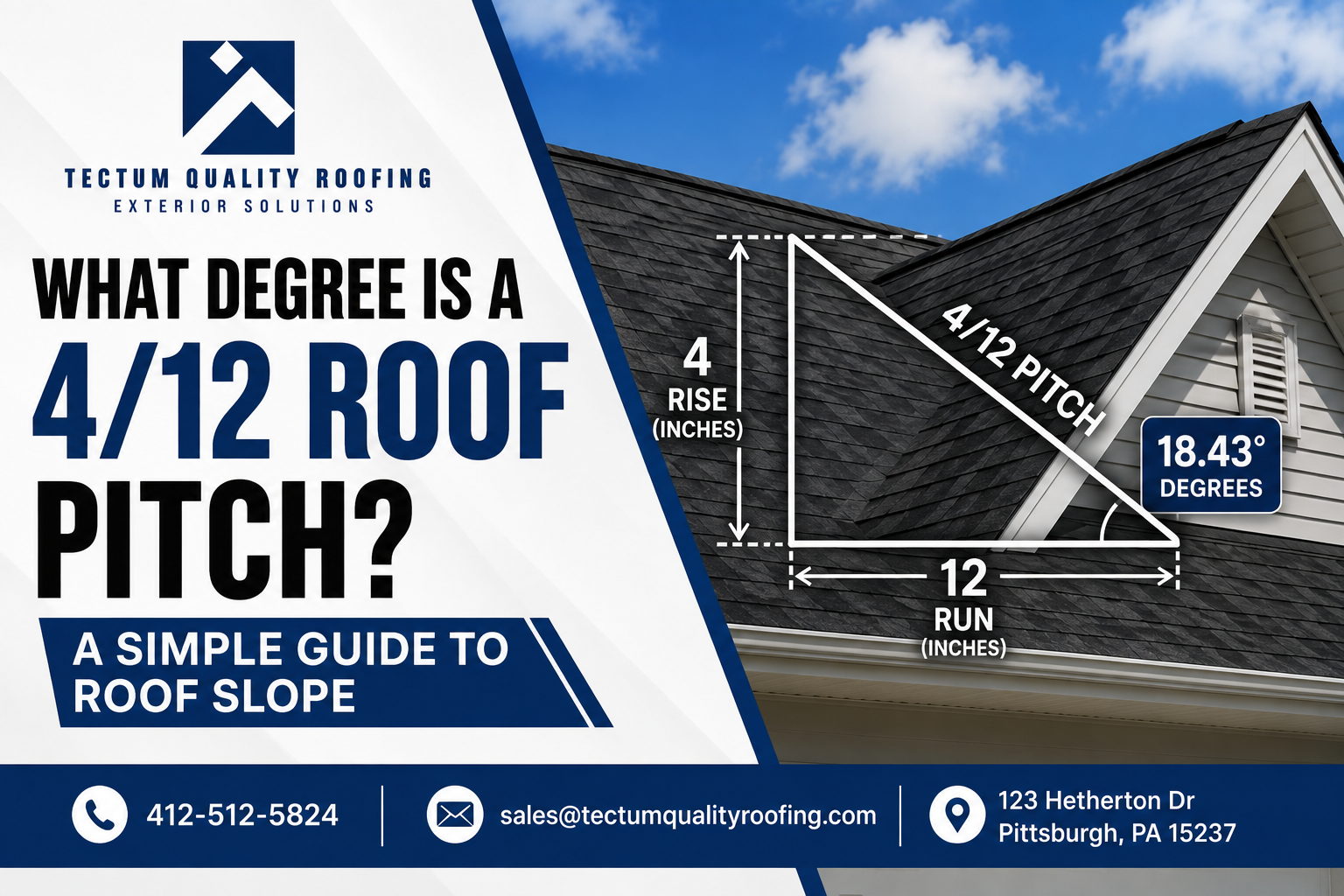
A 4/12 roof pitch is approximately 18.4 degrees.
In simple terms, a 4/12 roof rises 4 inches vertically for every 12 inches of horizontal distance. Roofers and builders commonly use pitch measurements to describe how steep a roof is. The same roof can also be described by its angle in degrees or its slope percentage.
Understanding these measurements can help homeowners make better decisions about roof repairs, replacement, materials, drainage, and overall roof design.
What Does a 4/12 Roof Pitch Mean?
The numbers in a roof pitch describe the relationship between the roof’s rise and run.
For a 4/12 pitch:
- 4 inches = vertical rise
- 12 inches = horizontal run
- 18.4 degrees = approximate roof angle
- 33.3% = approximate slope
So, if you measure 12 inches horizontally along the roof structure, the roof rises approximately 4 inches over that distance.
The “12” is used as a standard reference for roof pitch. This makes it easier for contractors, architects, and builders to communicate roof slopes consistently.
How Many Degrees Is a 4/12 Roof Pitch?
A 4/12 roof pitch is approximately 18.43 degrees.
The calculation is based on basic trigonometry:
Angle = arctan(rise ÷ run)
For a 4/12 roof:
Angle = arctan(4 ÷ 12)
Angle = arctan(0.3333)
Angle ≈ 18.43°
For everyday roofing discussions, this is generally rounded to 18.4 degrees.
This means that a roof with a 4/12 pitch slopes upward at an angle of about 18 degrees from the horizontal.
4/12 Roof Pitch: Degrees, Percentage and Ratio
Roof slope can be expressed in several different ways. Knowing the equivalent measurements can make roofing plans and material specifications easier to understand.
| Roof Measurement | 4/12 Equivalent |
| Pitch | 4/12 |
| Rise | 4 inches |
| Run | 12 inches |
| Angle | Approximately 18.43° |
| Slope | Approximately 33.3% |
| Ratio | 1:3 |
The 33.3% slope comes from dividing the rise by the run and multiplying by 100:
(4 ÷ 12) × 100 = 33.3%
So, while 4/12, 18.43 degrees, and 33.3% slope look different, they are simply different ways of describing the same roof geometry.
Is a 4/12 Roof Considered Steep?
A 4/12 roof is generally considered a moderate or conventional roof slope. It is noticeably sloped, but it is not as steep as roofs with pitches such as 8/12, 10/12, or 12/12.
For homeowners, the important point is that roof pitch affects more than appearance. The slope can influence:
- How quickly rainwater moves off the roof
- Which roofing materials are suitable
- Installation requirements
- Roof surface area
- Maintenance and accessibility
- The overall architectural appearance of the home
A roof’s actual performance, however, depends on more than pitch alone. Roofing material, installation quality, flashing, ventilation, drainage, weather exposure, and the condition of the roof system all matter.
Is a 4/12 Roof Good for Asphalt Shingles?
A 4/12 pitch is commonly associated with residential asphalt-shingle roofing. However, homeowners should not assume that every shingle product has identical requirements.
Manufacturers specify minimum slope requirements and installation instructions for their products. Local building requirements may also apply. Therefore, the correct roofing material should always be selected according to the manufacturer’s specifications and applicable codes.
If you are replacing an existing roof, a professional roofer can inspect the roof structure and determine whether the existing pitch and roofing system are appropriate for the planned replacement.
How Does 4/12 Compare With Other Roof Pitches?
It can be easier to understand a 4/12 roof by comparing it with other common pitches.
| Roof Pitch | Approximate Angle |
| 2/12 | 9.5° |
| 3/12 | 14.0° |
| 4/12 | 18.4° |
| 5/12 | 22.6° |
| 6/12 | 26.6° |
| 8/12 | 33.7° |
| 10/12 | 39.8° |
| 12/12 | 45° |
As the first number increases, the roof becomes steeper. A 12/12 pitch, for example, rises 12 inches for every 12 inches of horizontal run and creates a 45-degree angle.
Read- How-To-Work-Out-Pitch-Of-Roof-In-Degrees
Why Does Roof Pitch Matter?
Roof pitch plays an important role in the design and performance of a roofing system.
1. Water Drainage
A sloped roof allows rainwater to move toward gutters and drainage areas. A properly designed and installed roof helps prevent water from sitting on the roofing surface.
2. Roofing Material Selection
Different roofing materials have different slope requirements. Asphalt shingles, metal roofing, tile, and low-slope roofing systems should be installed according to their specific manufacturer requirements.
3. Roof Surface Area
A sloped roof has more surface area than the flat footprint of the building. The steeper the roof, the greater the sloped surface can become. This matters when estimating roofing materials.
4. Installation Considerations
Roof pitch can affect how easily roofing contractors can move and work on the roof. As pitch increases, specialized safety procedures and equipment may become increasingly important.
5. Architectural Appearance
Roof pitch also contributes significantly to the appearance of a home. A 4/12 roof creates a different profile from a steep 10/12 or 12/12 roof.
How Can You Find the Pitch of an Existing Roof?
You do not necessarily need to climb onto your roof to determine its pitch.
One method is to access the attic and measure the rise and run of a rafter. If you can safely identify a 12-inch horizontal run, measure how much the rafter rises over that distance.
For example, if the rafter rises 4 inches over a 12-inch horizontal run, the roof has a 4/12 pitch.
You can then convert that measurement to degrees using the formula:
Degrees = arctan(rise ÷ run)
For safety, avoid climbing onto a roof simply to measure its pitch. An attic measurement or professional roof inspection can often provide the information without requiring you to walk on the roof.
Does a 4/12 Pitch Affect Roofing Costs?
Roof pitch can influence roofing costs, but it is only one part of the overall estimate.
A roofing contractor may also consider:
- Total roof size
- Number of roof sections
- Roofing material
- Existing roof condition
- Number of layers requiring removal
- Flashing and ventilation
- Chimneys, skylights, and other penetrations
- Structural repairs
- Accessibility
- Local labor and material costs
A 4/12 roof is not automatically expensive or inexpensive to replace. An accurate estimate requires an assessment of the entire roofing system.
Frequently Asked Questions About 4/12 Roof Pitch
1. What degree is a 4/12 pitch?
A 4/12 roof pitch is approximately 18.43 degrees, or about 18.4 degrees when rounded.
2. Is a 4/12 roof steep?
A 4/12 roof is generally considered a moderate residential roof slope. It is steeper than low-slope roofs but considerably less steep than roofs with pitches such as 8/12 or 12/12.
3. What does 4/12 mean on a roof plan?
It means the roof rises 4 inches for every 12 inches of horizontal run.
4. Is 4/12 the same as a 33.3% slope?
Yes. A 4/12 pitch corresponds to a slope of approximately 33.3%.
5. Can I calculate roof pitch myself?
You can calculate the pitch if you can safely obtain accurate rise and run measurements. However, if you are planning a roof replacement or repair, having a professional roofing contractor verify the roof pitch can help avoid measurement and material-selection errors.
Final Thoughts
So, what degree is a 4/12 roof pitch? The answer is approximately 18.43 degrees.
A 4/12 pitch means the roof rises 4 inches for every 12 inches of horizontal run. It can also be expressed as approximately a 33.3% slope. Understanding these measurements is useful when reviewing roofing plans, comparing roofing systems, or discussing a roof replacement with a contractor.
If you are unsure about your roof’s pitch or need help evaluating your roofing system, a professional inspection is the best way to get accurate information about the roof’s condition, materials, drainage, and installation requirements.
For roofing questions, inspections, repairs, or replacement planning, contact Tectum Quality Roofing to discuss your project and determine the right next step for your roof.