

What Is a 5/12 Roof Pitch? A Simple Guide for Homeowners
If you are planning a new roof, replacing an old one, or simply trying to understand your home’s roof design, you may have come across the term 5/12 roof pitch. But what does it actually mean?
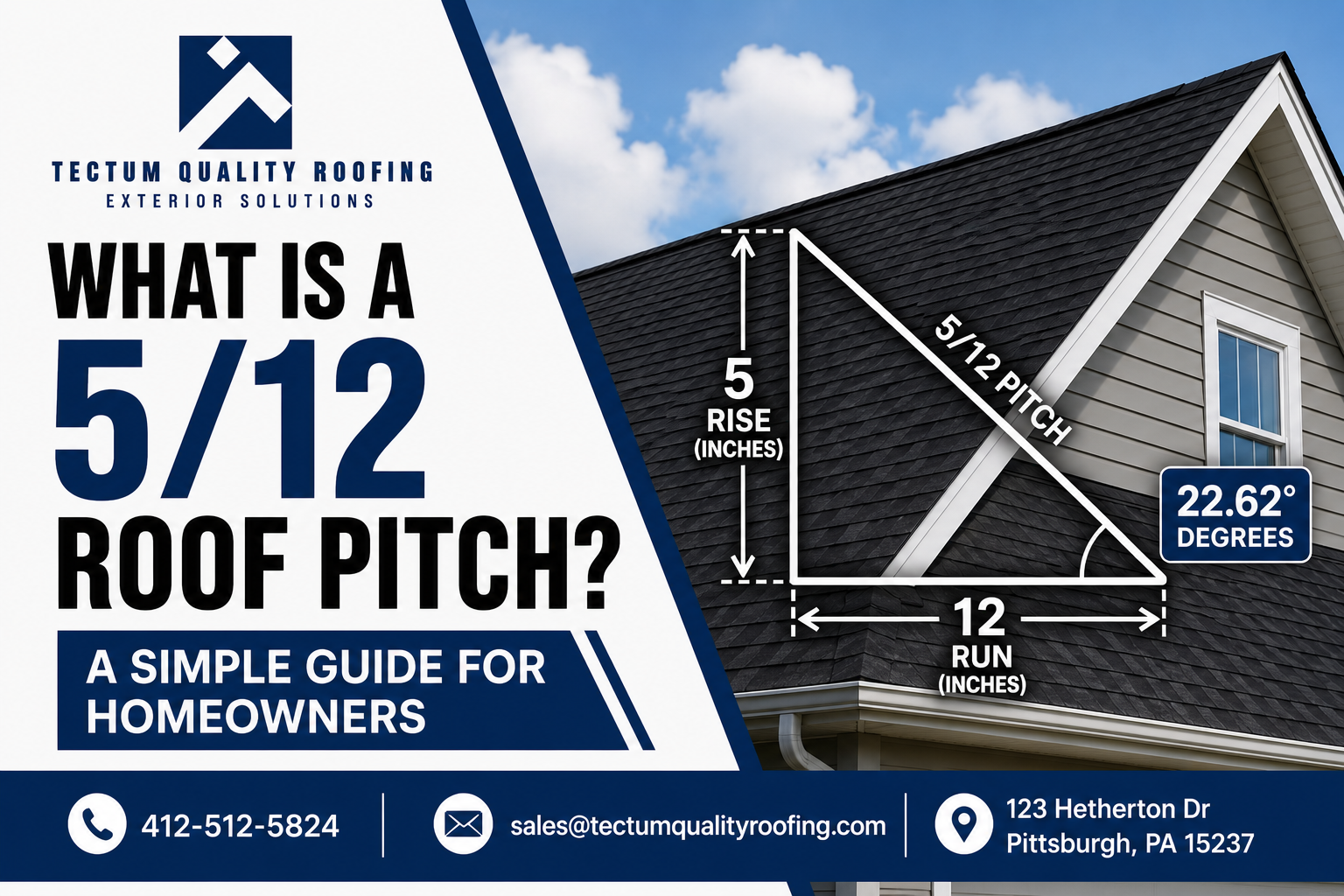
A 5/12 roof pitch describes how steep a roof is. The first number tells you how many inches the roof rises vertically, while the second number represents the 12-inch horizontal distance. In simple terms, a 5/12 roof pitch rises 5 inches for every 12 inches it runs horizontally.
This is considered a moderate roof slope and is a common choice for many residential homes.
What Does a 5/12 Roof Pitch Mean?
A 5/12 roof pitch means the roof rises 5 inches for every 12 inches of horizontal run. If you look at a cross-section of the roof, you would see a slope that moves upward 5 inches as it travels 12 inches across.
The pitch can also be expressed as a ratio of 5:12. For example:
- 12 inches of horizontal run = 5 inches of rise
- 24 inches of horizontal run = 10 inches of rise
- 36 inches of horizontal run = 15 inches of rise
The roof pitch is important because it affects the appearance, drainage, roofing materials, attic space, and overall construction of a home.
How Steep Is a 5/12 Roof?
A 5/12 roof is moderately steep. It is not as low-slope as a 2/12 or 3/12 roof, but it is also not extremely steep like a 10/12 or 12/12 roof.
A 5/12 roof pitch is approximately 22.6 degrees. This gives the roof enough slope for rain and other precipitation to drain effectively while maintaining a practical design for many residential properties.
For homeowners, this balance is one reason a 5/12 roof is often considered a versatile option.
Is a 5/12 Roof Pitch Good?
Yes, a 5/12 roof pitch can be an excellent choice for a residential roof. It provides a useful combination of appearance, drainage, and practicality.
One of the biggest advantages is water runoff. Because the roof has a noticeable slope, rainwater can move toward the gutters rather than sitting on the roofing surface.
A 5/12 slope can also work with many commonly used residential roofing materials. However, the exact requirements depend on the roofing product, manufacturer instructions, local building codes, and the design of the roof.
How Does a 5/12 Roof Compare With Other Pitches?
Understanding other roof pitches can make the 5/12 measurement easier to visualize.
A 4/12 roof pitch rises 4 inches for every 12 inches of horizontal run, making it slightly less steep than a 5/12 roof.
A 6/12 roof pitch rises 6 inches for every 12 inches of run, so it is noticeably steeper than a 5/12 roof.
Here is a quick comparison:
| Roof Pitch | Rise per 12 Inches | Approx. Angle |
| 3/12 | 3 inches | 14.0° |
| 4/12 | 4 inches | 18.4° |
| 5/12 | 5 inches | 22.6° |
| 6/12 | 6 inches | 26.6° |
| 8/12 | 8 inches | 33.7° |
| 10/12 | 10 inches | 39.8° |
As you can see, a 5/12 roof sits comfortably in the middle of these common residential slopes.
How Do You Calculate a 5/12 Roof Pitch?
Calculating a 5/12 roof pitch is straightforward. You divide the vertical rise by the horizontal run.
For a 5/12 roof:
5 ÷ 12 = 0.4167
This means the roof has a slope of approximately 41.67%.
If you want to find the roof angle, you can use the inverse tangent:
arctan(5 ÷ 12) ≈ 22.6 degrees
In practical roofing work, contractors often use specialized pitch gauges, levels, or digital measuring tools to determine the actual slope.
What Does a 5/12 Roof Look Like?
Visually, a 5/12 roof pitch has a noticeable slope without looking extremely steep. It gives a home a traditional residential appearance and can work well with many architectural styles.
The exact appearance will depend on the roof shape, building width, number of roof sections, and roofing material. A gable roof with a 5/12 slope, for example, will look different from a hip roof with the same pitch.
The width of the building also affects how much roof area is visible. A wider structure can create longer roof slopes even when the pitch remains 5/12.
Does a 5/12 Roof Shed Rain and Snow Well?
A 5/12 roof pitch provides a reasonable slope for rainwater runoff. Water generally moves down the roof efficiently when the surface is properly installed and maintained.
Snow performance is more complicated. Whether snow slides off or accumulates depends on factors such as climate, snow depth, roofing material, roof orientation, insulation, and local conditions.
If your home is in an area with significant snowfall, it is important to have the roof designed according to local building requirements rather than choosing a pitch based on slope alone.
What Roofing Materials Work With a 5/12 Pitch?
A 5/12 slope is compatible with many common residential roofing systems. Depending on the product and installation requirements, these may include asphalt shingles, metal roofing, wood shingles or shakes, and other roofing systems.
However, not every roofing product has the same minimum slope requirement. Always check the manufacturer’s installation instructions before selecting a material.
Proper underlayment, flashing, ventilation, and installation techniques are just as important as the roof pitch when it comes to protecting the home from moisture.
Is a 5/12 Roof Easy to Walk On?
A 5/12 roof pitch is steep enough that walking on it should not be treated casually. While experienced roofing professionals may work on roofs with this slope using appropriate equipment and safety procedures, homeowners should avoid attempting roof work without proper training and fall protection.
Roof surfaces can also become particularly dangerous when wet, icy, dusty, or covered with moss.
For inspections, repairs, or maintenance, hiring a qualified roofing professional is generally the safer option.
How Does Roof Pitch Affect Cost?
Roof pitch can influence roofing costs because steeper roofs can require additional labor, safety equipment, and installation time.
A 5/12 roof is generally less challenging to work on than a very steep roof, but it still requires proper fall protection and safe access. The final cost of a roofing project also depends on roof size, material, tear-off requirements, decking condition, flashing, ventilation, labor rates, and the complexity of the roof.
Therefore, the pitch alone cannot determine the total roofing price.
Final Thoughts
So, what is a 5/12 roof pitch? It is a roof slope that rises 5 inches for every 12 inches of horizontal run, equal to approximately 22.6 degrees.
It is a popular and practical residential roof pitch because it provides a noticeable slope for water drainage without being excessively steep. It can also accommodate many common roofing materials when installed according to manufacturer requirements and local building codes.
If you are considering a new roof, knowing the pitch can help you understand your home’s design and communicate more effectively with a roofing contractor.