

Rainwater may seem harmless, but when it does not drain properly from your roof, it can cause serious problems for your property. Water that collects around roof edges, gutters, and drainage outlets can eventually lead to leaks, damaged roofing materials, stained exterior walls, and even foundation issues.
Whether you own a residential home or a commercial building, a properly maintained roof drainage system is essential for protecting your investment. Gutters, downspouts, roof slopes, and drainage outlets work together to direct rainwater away from vulnerable areas.
Proper roof drainage also helps protect surrounding structures, including concrete driveways, sidewalks, patios, and foundations. When water repeatedly collects around these areas, it can contribute to cracking, erosion, and the need for concrete repair and installation.
Understanding how roof drainage works and why regular maintenance matters can help you avoid expensive property repairs.
1. Protect Your Roof From Standing Water
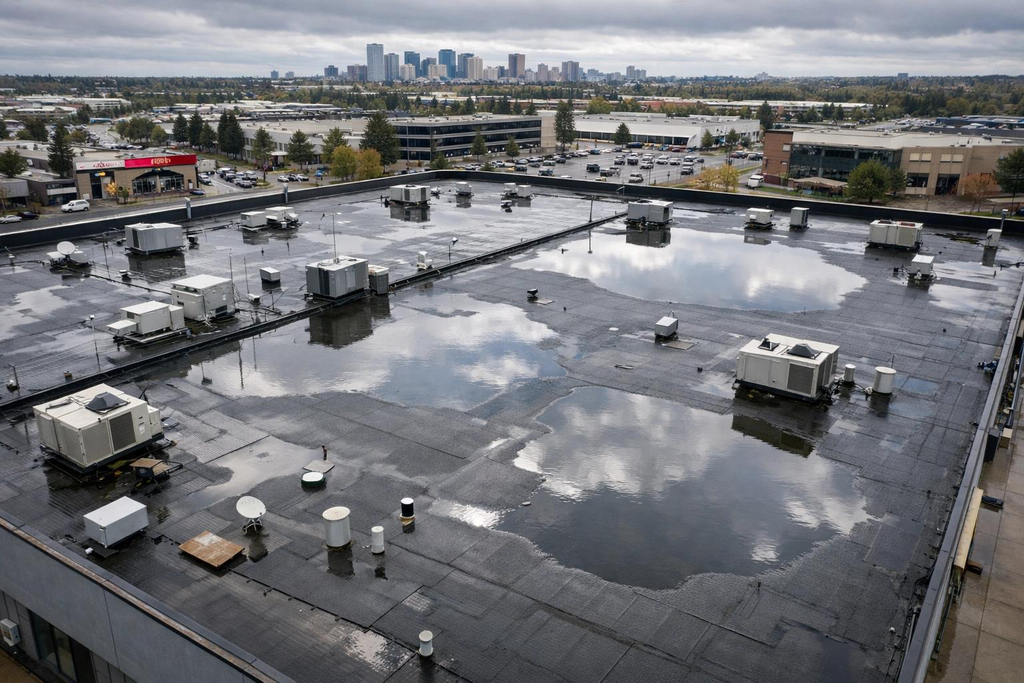
One of the biggest risks of poor roof drainage is standing water. When rainwater cannot flow properly toward drainage outlets, it may collect in low areas of the roof.
This problem is particularly common on flat and low-slope commercial roofs. Over time, standing water can place additional weight on the roof structure and increase the risk of leaks.
Common causes of roof water accumulation include:
- Blocked roof drains and outlets.
- Improper roof slope.
- Damaged or poorly installed gutters.
- Debris collecting around drainage areas.
- Poorly designed drainage systems.
Professional roof inspections can help identify these issues before they cause significant damage. Addressing drainage problems early can protect roofing materials and reduce the likelihood of costly repairs.
2. Prevent Roof Leaks and Interior Water Damage
When gutters and roof drainage systems become blocked, rainwater may overflow and enter areas where it should not collect.
Water can move beneath roofing materials, damage flashing, and eventually reach ceilings, insulation, and interior walls.
Homeowners may notice water stains, peeling paint, damp ceilings, or musty odors. Commercial property owners may face additional problems, including damaged equipment, inventory, and interruptions to daily business operations.
Regular roof inspections help identify damaged shingles, loose flashing, clogged drainage outlets, and other vulnerable areas.
A properly functioning drainage system, combined with quality roofing materials and professional installation, helps keep rainwater away from the building’s interior.
3. Protect Your Foundation and Concrete Surfaces
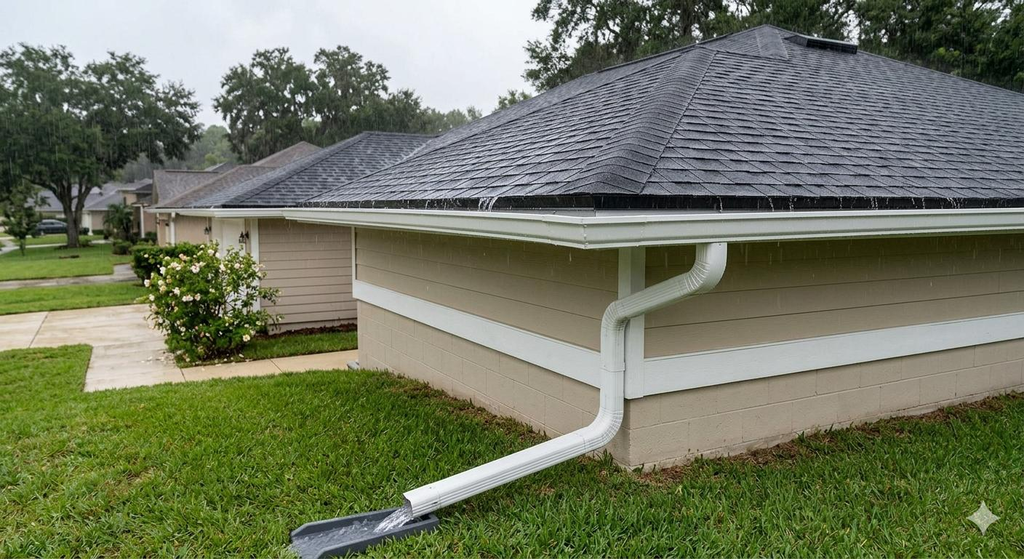
Roof drainage does not stop at the roofline. Where rainwater goes after leaving the roof is equally important.
If downspouts release water directly beside your foundation, repeated exposure can cause soil erosion, moisture buildup, and drainage problems around the property.
Over time, these conditions may affect nearby concrete surfaces, including:
- Driveways and parking areas.
- Concrete sidewalks and walkways.
- Patios and outdoor seating areas.
- Concrete steps and entryways.
- Foundation-adjacent slabs.
Repeated moisture exposure, soil movement, and freeze-thaw conditions can contribute to concrete cracking and uneven surfaces.
In some cases, property owners may need professional concrete repair and installation to address damaged outdoor surfaces.
To reduce these risks, make sure downspouts direct water away from the foundation and that the surrounding ground has suitable drainage.
4. Keep Gutters and Downspouts Clear
Gutters are one of the most important components of a residential roof drainage system. They collect rainwater from the roof and direct it toward downspouts.
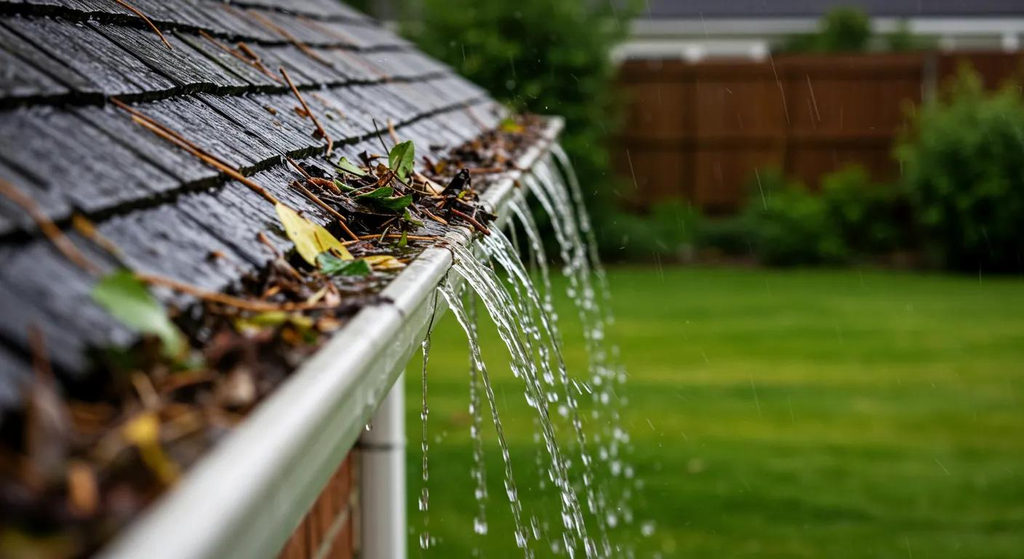
However, leaves, branches, dirt, and other debris can restrict water movement. When gutters become clogged, water may overflow and damage siding, fascia boards, landscaping, and nearby foundations.
Follow these basic maintenance steps:
- Remove leaves and debris from gutters regularly.
- Check downspouts for blockages.
- Inspect gutter joints for leaks.
- Look for loose brackets and sagging sections.
- Confirm that water flows away from the building.
- Check gutters after major storms.
For commercial buildings, larger roof areas may require more frequent inspections and properly sized drainage systems.
5. Choose the Right Drainage System for Your Property
Every building has different drainage requirements. The right system depends on roof size, slope, design, local rainfall, and the property’s surrounding layout.
- For Residential Properties
Traditional gutters and downspouts are commonly used to manage rainwater from sloped roofs. Gutter guards may also help reduce debris accumulation, although they still require periodic inspection and cleaning.
- For Commercial Properties
Flat and low-slope roofs often use internal roof drains, scuppers, and tapered insulation systems to move water toward designated outlets.
Commercial drainage systems must be designed to handle the expected rainfall and roof area. Poor drainage planning can create significant maintenance and structural concerns.
Working with an experienced roofing contractor helps ensure that your drainage system is appropriate for your building.
6. Warning Signs That Your Roof Drainage Needs Attention
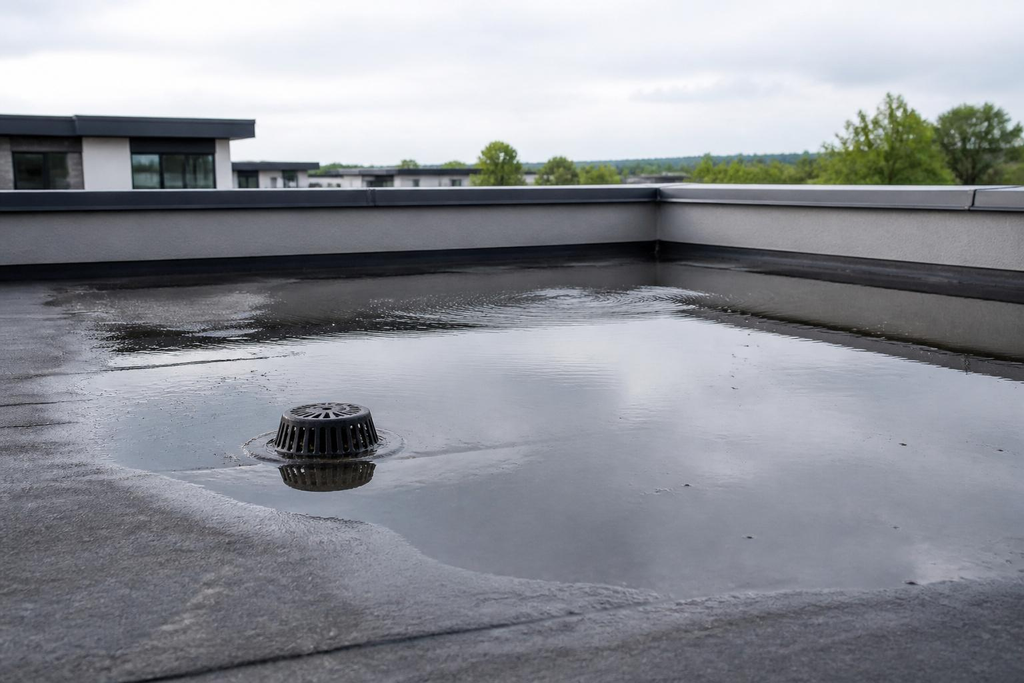
Roof drainage problems are not always easy to identify from inside your property. However, certain warning signs indicate that your system may need professional attention.
Watch for these issues:
- Water overflowing from gutters during rainfall.
- Standing water on flat or low-slope roofs.
- Water stains around ceilings and exterior walls.
- Sagging or detached gutter sections.
- Soil erosion near downspouts.
- Cracks in nearby concrete surfaces.
- Moisture around the building’s foundation.
If you notice any of these signs, arranging a professional inspection can help identify the source of the problem.
Ignoring early warning signs may allow minor drainage issues to develop into more expensive roofing and exterior repairs.
7. Seasonal Roof Drainage Maintenance: A Smart Prevention Strategy
A regular maintenance schedule can help keep your roof drainage system working properly throughout the year.
- Spring: Check gutters, downspouts, and roof drains for debris left behind by winter weather.
- Summer: Inspect roof surfaces, flashing, and drainage connections for damage caused by heat and storms.
- Fall: Remove accumulated leaves and branches before heavy rainfall and winter conditions begin.
- Winter: Watch for ice buildup, blocked outlets, and water-related damage. Avoid climbing onto icy roofs or attempting unsafe repairs.
For commercial property owners, scheduled professional inspections are especially useful because drainage issues can affect larger roof areas and business operations.
Proper Licensing, Insurance, and Certifications Matter
Roof drainage work requires proper installation, suitable materials, and attention to building safety. Choosing the right contractor can make a significant difference in the quality and reliability of the finished work.
Before hiring a roofing professional, consider the following:
- Licensing: Verify applicable state and local licensing requirements.
- Insurance: Confirm general liability insurance and workers’ compensation coverage.
- Certifications: Ask about relevant manufacturer certifications and industry qualifications.
- Written Estimates: Request a clear breakdown of labor, materials, and project costs.
- Workmanship: Discuss installation standards, warranties, and maintenance recommendations.
A dependable contractor should explain the condition of your roof, identify drainage concerns, and recommend practical solutions based on your property’s needs.
Conclusion
Proper roof drainage is essential for protecting your property from water-related damage. A well-maintained system helps prevent roof leaks, standing water, exterior deterioration, foundation moisture, and damage to surrounding concrete surfaces.
Whether you own a home or manage a commercial building, regular inspections and timely maintenance can help reduce repair costs and protect your property’s long-term condition.
At Tectum Quality Roofing, we understand the importance of dependable roofing systems and proper exterior maintenance. With more than 25 years of industry experience, our team is committed to helping residential and commercial property owners maintain strong, reliable roofing systems.
If your gutters are overflowing, your roof has standing water, or you have noticed signs of moisture damage, contact our team today.