

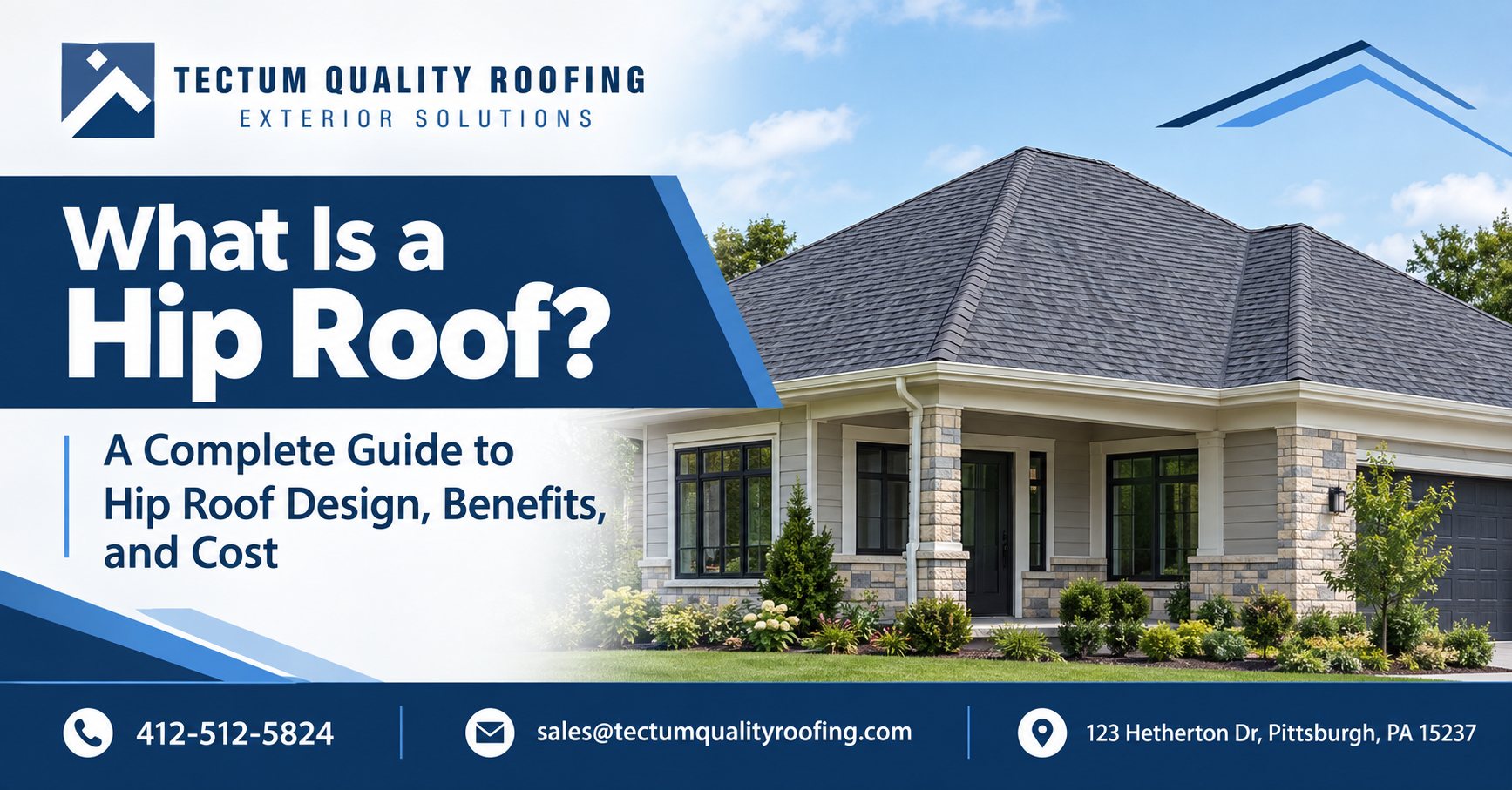
What Is a Hip Roof? A Complete Guide to Hip Roof Design, Benefits, and Cost
If you are planning to build a new home or replace an existing roof, you may have come across the term hip roof. But what is a hip roof, and why is this roof style so popular?
A hip roof is a type of roof where all four sides slope downward toward the walls. Unlike a gable roof, which has vertical triangular sections at two ends, a hip roof has no flat vertical ends. Its sloping design gives a home a balanced appearance while also offering practical benefits such as good weather resistance and stability.
In this guide, we will explain how a hip roof works, its main types, advantages and disadvantages, and factors to consider before choosing one for your home.
What Is a Hip Roof?
A hip roof is a roofing design in which all four sides slope downward from a central ridge or peak toward the exterior walls. The sloping sections are called hips, and they meet at the corners of the building.
The exact shape of a hip roof can vary depending on the size and design of the house. Some roofs have a single ridge, while others may include multiple sections, dormers, or intersecting rooflines.
One of the defining features of a hip roof is that it does not have vertical gable ends. Instead, every side is covered by a sloping roof surface.
How Does a Hip Roof Work?
The basic structure of a hip roof consists of several sloping planes that meet along ridges and hips. The roof framing supports the roofing materials and transfers the weight of the roof to the walls of the house.
Because the roof slopes on every side, rainwater can run away from the roof relatively quickly. This design can also help reduce the amount of wall area directly exposed to strong winds.
The slope, or pitch, of the roof is an important part of its performance. A steeper hip roof can provide more attic space and improve water runoff, while a lower pitch creates a different architectural appearance.
Common Types of Hip Roofs
There are several variations of the traditional hip roof. The right option depends on the shape of the building and the desired appearance.
1. Simple Hip Roof
A simple hip roof has four sloping sides that meet at a central ridge. It is one of the most common and straightforward hip roof designs.
This style works well for square or rectangular homes and provides a symmetrical appearance.
2. Pyramid Hip Roof
A pyramid hip roof has four triangular sloping sides that meet at a single point at the top. There is no horizontal ridge.
This design is often used on smaller buildings, garages, porches, and compact homes.
3. Half-Hip Roof
A half-hip roof, sometimes called a jerkinhead roof, combines elements of a gable and hip roof. The upper portion of the gable is replaced with a small hip section.
This design can provide a distinctive appearance while retaining some characteristics of both roof styles.
4. Mansard Hip Roof
A mansard roof has two slopes on each of its four sides. The lower slope is usually much steeper than the upper slope.
Although more complex than a standard hip roof, this design can create additional usable space inside the upper portion of a building.
Advantages of a Hip Roof
Choosing a hip roof can offer several benefits for homeowners.
1. Better Wind Resistance
Because a hip roof slopes on all four sides, it has fewer large vertical surfaces exposed to wind. This can make the roof more stable in areas that experience strong winds.
Proper construction and secure roof connections are still essential. A well-designed roof performs better than one that is simply selected based on appearance.
2. Good Rainwater Drainage
The sloping surfaces allow rainwater to move toward the edges of the roof. With correctly installed gutters and downspouts, water can be directed away from the walls and foundation.
3. Balanced Appearance
A hip roof gives a home a symmetrical and finished appearance. Its clean rooflines can work well with traditional, modern, and contemporary home designs.
4. Extra Eaves Around the House
Since all sides slope downward, a hip roof can provide eaves around much of the building. These overhangs can help shade windows and exterior walls from direct sunlight and precipitation.
5. Suitable for Different Home Designs
A hip roof can be adapted to many building shapes and architectural styles. It can also be combined with other roof sections to create more complex designs.
Disadvantages of a Hip Roof
While there are several benefits, a hip roof also has some drawbacks.
1. Higher Construction Cost
A hip roof generally requires more framing and more roofing material than a basic gable roof of a similar size. The additional hips, ridges, and angles can increase labor and installation costs.
2. More Complicated Framing
The structure of a hip roof is more complex than a simple two-sided roof. Accurate measurements and professional installation are important to ensure the roof is properly supported.
3. Less Attic Space
Depending on the roof pitch and design, a hip roof may provide less usable attic space than a gable roof. The sloping sides can limit the height available near the edges.
4. More Difficult Repairs
Because the roof has multiple sloping sections and intersections, some repairs can be more complicated. Roofing contractors may need additional time to identify and repair problems around hips, valleys, and other junctions.
Hip Roof vs. Gable Roof
One of the most common comparisons homeowners make is between a hip roof and a gable roof.
A gable roof typically has two sloping sides and vertical walls at the ends. It has a simpler structure and can provide more attic space. However, the vertical gable ends can be more exposed to strong winds.
A hip roof slopes on all four sides. It generally offers a more compact and symmetrical design and can perform well in windy conditions.
The best choice depends on factors such as climate, house design, budget, attic requirements, and personal preference.
What Materials Can Be Used on a Hip Roof?
A hip roof can be covered with many of the same roofing materials used on other roof designs. Common options include:
- Asphalt shingles
- Metal roofing
- Clay or concrete tiles
- Slate
- Wood shingles and shakes
- Synthetic roofing materials
The best material depends on the roof’s pitch, local climate, building requirements, maintenance expectations, and budget.
For example, metal roofing can offer durability and low maintenance, while tiles can provide a distinctive architectural appearance. Asphalt shingles remain a popular option because they are available in many styles and price ranges.
How Much Does a Hip Roof Cost?
The cost of a hip roof varies considerably. The total price depends on the size of the roof, its pitch, framing complexity, roofing material, labor rates, removal of the existing roof, and other construction requirements.
A simple roof with standard asphalt shingles will usually cost less than a large, complex roof with premium materials and multiple intersections.
Instead of choosing a contractor based only on the lowest quote, compare the scope of work, materials, warranties, installation methods, and experience. Getting several detailed estimates can help you understand the actual project cost.
Is a Hip Roof Right for Your Home?
A hip roof can be a good choice if you want a roof with a balanced appearance, sloping surfaces on every side, and good resistance to weather.
It may be especially suitable for homes in areas where strong winds and heavy rainfall are concerns. However, its more complex construction can make it more expensive than simpler roof designs.
Before making a decision, consider your home’s structure, local weather conditions, desired appearance, attic space, maintenance needs, and overall budget.
Final Thoughts
So, what is a hip roof? In simple terms, it is a roof that slopes downward on all four sides of a building. Its distinctive design provides a combination of appearance, stability, and practical weather protection.
Although a hip roof can cost more and require more complicated framing than a basic gable roof, its advantages make it a popular option for many homes. With the right design, materials, and professional installation, it can provide reliable protection for many years.
If you are considering a new roof, speak with a qualified roofing professional who can assess your home and recommend a design that fits your climate, structure, and budget.