

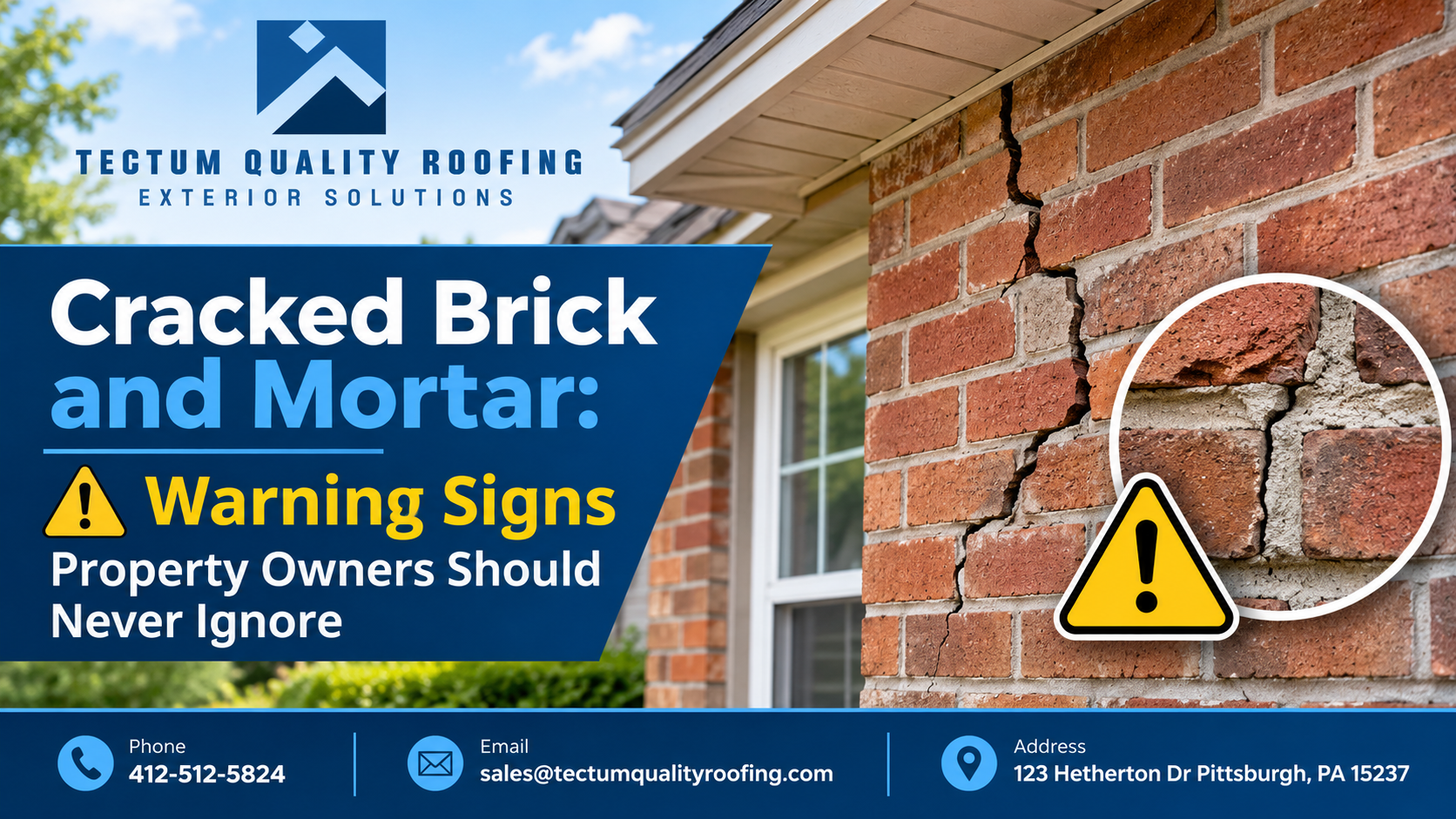
Brick exteriors are valued for their durability, classic appearance, and ability to protect buildings from the elements. However, even strong masonry can develop problems over time. Weather exposure, moisture, shifting foundations, and aging mortar can cause cracks that affect the appearance and performance of your property’s exterior.
If you have noticed cracked brick and mortar around your home or commercial building, it is important to understand what those signs may indicate. While some cracks are cosmetic, others can point to water intrusion, deteriorating mortar joints, or structural movement that requires professional evaluation.
For property owners in Pittsburgh, changing temperatures, winter freezing, and repeated moisture exposure can place additional stress on exterior masonry. Addressing problems early can help prevent further deterioration and reduce the risk of more extensive repairs.
In this guide, we explain the common warning signs of masonry damage, what causes them, and when professional masonry repair may be necessary.
1. Stair-Step Cracks Between Bricks
One of the most recognizable signs of masonry damage is a stair-step crack that follows the mortar joints between individual bricks.
These cracks often develop diagonally across a wall, creating a pattern similar to a staircase. They may result from foundation settlement, soil movement, temperature changes, or stress within the building structure.
Small cracks do not always mean a building has a serious structural problem. However, cracks that continue to grow, appear in several locations, or become wider over time deserve professional attention.
Look for additional warning signs, including:
- Cracks extending from the corners of windows or doors.
- Gaps forming between bricks and mortar.
- Doors or windows that suddenly become difficult to open.
- Visible separation between exterior walls and adjoining materials.
A professional inspection can help determine whether the cracks are related to normal material movement, deteriorating mortar, or a more significant structural concern.
2. Crumbling or Missing Mortar Joints
Mortar holds bricks together and helps protect the wall against water penetration. As mortar ages, exposure to rain, wind, temperature fluctuations, and freezing conditions can cause it to weaken.
You may notice powdery mortar, small pieces falling from the joints, or visible gaps between bricks. These symptoms suggest that the mortar may no longer be providing adequate protection.
When deteriorated joints remain unrepaired, moisture can enter the masonry and affect nearby building materials. Over time, the damage may become more expensive to correct.
Professional mortar repointing is a common solution when existing mortar joints have deteriorated. The process involves removing damaged mortar to an appropriate depth and installing compatible replacement mortar.
Using mortar that suits the existing brickwork is especially important for older buildings, where overly hard or incompatible materials can cause additional damage.
3. Loose, Broken, or Bulging Bricks
Bricks can crack, break, or move out of position because of moisture exposure, freeze-thaw damage, deteriorating mortar, or structural movement.
Pay close attention to bricks that appear loose, protrude from the wall, or show signs of significant surface deterioration.
Bulging masonry is particularly concerning because it can indicate movement within the wall assembly or problems with its support. In these situations, simply replacing individual bricks may not address the underlying issue.
For residential properties, damaged brickwork can affect exterior walls, chimneys, foundations, and other masonry features. Commercial buildings may experience similar problems across large exterior wall sections, entrance areas, and building corners.
A qualified professional can assess the affected area and determine whether brick replacement, repointing, or further structural evaluation is needed.
If masonry appears unstable or at risk of falling, keep people away from the area and arrange a prompt inspection.
4. White Stains on Brick Walls
White, chalky deposits on brick surfaces may be a sign of efflorescence. This condition occurs when moisture moves through masonry, carries dissolved salts to the surface, and leaves deposits behind as the water evaporates.
Efflorescence is not necessarily evidence of structural damage. However, recurring white deposits may indicate a moisture source that needs attention.
Potential causes include leaking gutters, damaged flashing, poor drainage, and water entering through deteriorated mortar joints.
Removing the visible stains without addressing the moisture source may provide only temporary results. A professional assessment can help identify potential entry points and determine whether masonry repairs or improvements to water management are necessary.
Keeping moisture away from exterior walls is an important part of protecting the long-term condition of your brickwork.
5. Water Leaks Around Exterior Masonry
Cracked brick and mortar can allow water to enter the wall assembly. If moisture reaches interior materials, it may contribute to staining, peeling paint, damaged drywall, or deterioration of other building components.
Common signs of possible water intrusion include:
- Damp interior walls near exterior brickwork.
- Water stains around windows and doors.
- Peeling paint or bubbling wall finishes.
- Musty odors in affected areas.
- Moisture problems that return after heavy rainfall.
These symptoms can also result from roof leaks, damaged window seals, plumbing issues, or defective flashing. Therefore, it is important to identify the source before deciding which repairs are appropriate.
Because roofing and masonry work can overlap around chimneys, roof-to-wall connections, and exterior flashing, a thorough assessment of the affected area can help determine the appropriate next step.
Tectum Quality Roofing helps property owners address roofing and exterior protection concerns. When masonry damage is present, the appropriate repair may require a qualified masonry specialist, depending on the location and extent of the problem.
6. Cracks Around Windows, Doors, and Chimneys
Certain areas of a building are more vulnerable to masonry deterioration because they experience concentrated loads, movement, or repeated moisture exposure.
Windows and doors have joints where different building materials meet. Chimneys are exposed to wind, rain, snow, and temperature fluctuations above the roofline.
Watch for cracks around lintels, gaps above window frames, damaged chimney mortar, or separation where masonry meets other exterior materials.
These conditions may indicate deteriorating joints, failed sealants, water penetration, or movement that requires further investigation.
Chimneys deserve particular attention because damaged mortar and loose bricks can allow water into the structure. Moisture may then affect adjacent roofing materials or interior spaces.
If you notice cracked chimney masonry or leaks near a roof-to-wall connection, arrange an inspection to identify whether the problem involves the masonry, roofing system, flashing, or a combination of these components.
View- when-to-call-for-emergency-brick-repair-in-pittsburgh-services
7. Masonry Cracks That Keep Returning
Have you repaired a crack only to see it appear again several months later? Recurring damage may indicate that the underlying cause has not been resolved.
For example, filling a crack without addressing ongoing settlement, water intrusion, or deteriorating mortar may result in another repair being needed.
Repeated cracking should be taken seriously when accompanied by widening gaps, displaced bricks, water stains, or visible wall movement.
A professional evaluation can help determine whether the damage is limited to the mortar joints or whether further investigation is necessary.
Addressing the cause instead of repeatedly covering the visible crack can help property owners make more informed maintenance decisions.
What Causes Cracked Brick and Mortar in Pittsburgh?
Understanding the cause of masonry damage is essential when choosing the right repair method.
1. Freeze-Thaw Cycles
Pittsburgh experiences seasonal temperature changes that can expose exterior masonry to repeated freezing and thawing. When water enters small openings and freezes, expansion can contribute to cracking, surface deterioration, and weakened mortar joints.
2. Moisture and Poor Drainage
Blocked gutters, leaking downspouts, damaged flashing, and water collecting near foundations can expose brickwork to persistent moisture. Over time, this may accelerate deterioration and increase the risk of water entering the building.
3. Natural Aging
Mortar and other building materials gradually deteriorate through years of exposure to the elements. Older properties may require periodic inspections to identify weakened joints before more extensive damage develops.
4. Foundation or Structural Movement
Settlement and changes in soil conditions can place stress on exterior walls. When cracks suggest ongoing movement, repairing the visible masonry alone may not be sufficient.
5. Improper Previous Repairs
Using incompatible mortar or unsuitable repair materials can contribute to masonry damage. A suitable repair should account for the existing brick, mortar composition, building age, and exposure conditions.
Identifying the likely cause helps ensure that repairs address the actual problem rather than just its appearance.
When Should You Schedule Professional Masonry Repair?
Not every masonry crack requires the same level of attention. Hairline cracks may be cosmetic, while expanding cracks, loose bricks, and bulging walls can indicate more serious problems.
Consider arranging a professional assessment when you notice:
- Cracks that continue to widen or spread.
- Missing or crumbling mortar across several joints.
- Loose, displaced, or bulging bricks.
- Water entering through exterior walls or chimney masonry.
- Repeated cracks after previous repairs.
- Gaps around windows, doors, or roof-to-wall connections.
If the damage suggests structural movement, consult an appropriately qualified structural professional when necessary.
Prompt evaluation can help clarify the condition of the masonry and identify which repairs should take priority.
How Professional Masonry Repair Helps Protect Your Property
The correct repair depends on the type and severity of the damage. Common solutions include repointing deteriorated mortar joints, replacing damaged bricks, repairing suitable cracks, and addressing sources of water intrusion.
In some cases, the work may also involve correcting drainage problems, replacing defective flashing, or arranging additional structural assessment.
For homeowners, maintaining brickwork can help preserve curb appeal and protect the building against moisture-related deterioration.
For commercial property owners, regular exterior maintenance can help reduce unexpected repair needs, protect occupied spaces, and maintain a professional building appearance.
Tectum Quality Roofing understands the importance of protecting your property’s exterior against Pittsburgh’s changing weather. Our team can help assess roofing concerns and related exterior water-entry issues, including problems around chimneys and roof connections. Where specialized masonry work is needed, we recommend working with a qualified masonry contractor.
Protect Your Home or Commercial Building With Tectum Quality Roofing
Cracked brick and mortar should never be ignored when the damage is spreading, allowing water inside, or affecting the stability of exterior walls. Early attention can help identify the problem, limit further deterioration, and prevent minor issues from becoming more complicated repairs.
Whether you own a home or manage a commercial property in the Pittsburgh area, maintaining your roof and exterior building components is an important part of protecting your investment.
Concerned about damaged brickwork, chimney leaks, or water entering around your roof? Contact Tectum Quality Roofing to discuss your exterior protection concerns and request an estimate.
Our team is committed to helping property owners understand their roofing needs and identify appropriate solutions for protecting their buildings.
Schedule an assessment today and take the next step toward maintaining a durable, weather-resistant property.