

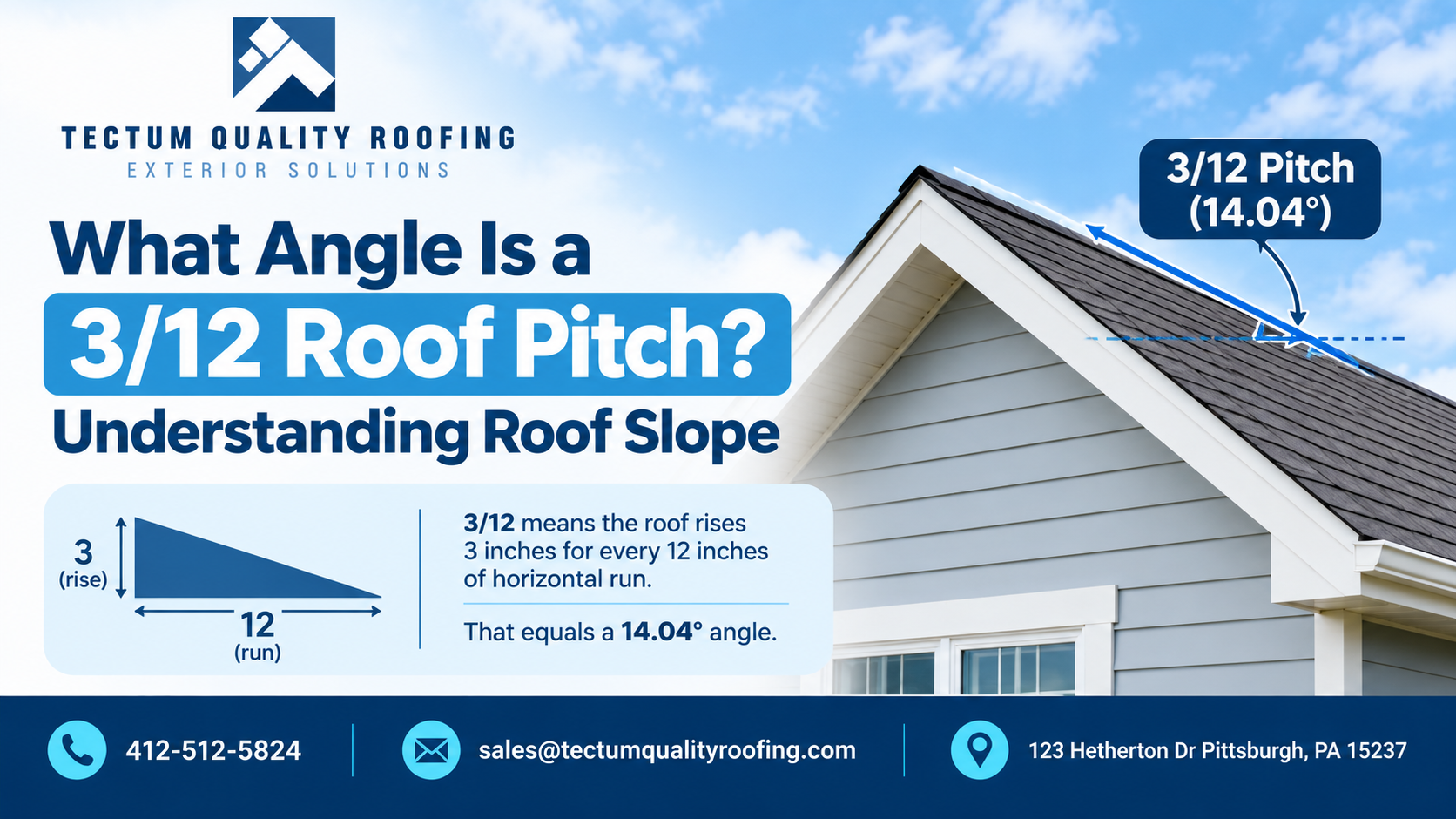
When looking at a roof, the pitch tells you how steep or shallow the roof is. One common measurement is a 3/12 roof pitch, which means the roof rises 3 inches for every 12 inches of horizontal distance. But what angle is a 3/12 roof pitch?
A 3/12 roof pitch has an angle of approximately 14.04 degrees. This makes it a relatively low-slope residential roof. While it may not look very steep from the ground, the pitch plays an important role in water drainage, roofing material selection, installation, and long-term roof performance.
If you are planning a roof replacement or dealing with roofing problems in Pittsburgh, understanding your roof pitch can help you make better decisions about your roofing system.
What Does a 3/12 Roof Pitch Mean?
A 3/12 roof pitch describes the relationship between the vertical rise and horizontal run of a roof. The first number represents the rise, while the second represents the run.
For a 3/12 pitch:
- The roof rises 3 inches.
- The horizontal run is 12 inches.
- The roof rises 3 inches for every 1 foot of horizontal distance.
- The angle is approximately 14.04 degrees.
This measurement is commonly used by roofers, builders, architects, and contractors when planning or evaluating a roof.
The pitch is important because it affects how quickly rainwater moves off the roof, which roofing materials can be used, and how the roofing system should be installed.
What Angle Is a 3/12 Roof Pitch?
The angle of a 3/12 roof pitch is approximately 14.04 degrees.
You can calculate the angle using the rise and run:
Angle = arctan(3 ÷ 12)
This produces an angle of about 14.04 degrees.
For homeowners, there is usually no need to perform the calculation yourself. A roofing contractor can measure the roof pitch during an inspection and determine the appropriate roofing system based on the roof’s design.
A 3/12 pitch is shallower than many traditional residential roofs. For comparison, a 4/12 roof is approximately 18.43 degrees, while a 6/12 roof is approximately 26.57 degrees.
How Steep Is a 3/12 Roof?
A 3/12 roof slope is considered relatively shallow compared with steeper residential roof designs. From the ground, it may appear fairly flat, although it still has enough slope to direct water toward the roof edges and drainage areas.
The lower slope means water generally moves more slowly than it would on a steep roof. Because of this, proper installation becomes especially important.
Flashing, underlayment, roof ventilation, gutters, and other components need to work together to help protect the structure from moisture. Even a small installation problem can become more noticeable on a lower-slope roof.
Is a 3/12 Roof Pitch Good for a House?
A 3/12 roof pitch can be suitable for certain homes and building designs. Whether it is the right choice depends on the structure, climate, roofing material, local building requirements, and how the roof is designed.
One benefit of a lower roof pitch is that it can provide a more streamlined appearance. It may also reduce the overall roof height compared with a much steeper design.
However, drainage needs to be considered carefully. A roof with a shallow slope needs properly designed drainage paths so rainwater does not remain on the roofing surface longer than necessary.
For homeowners in Pittsburgh, where roofs can be exposed to rain, snow, wind, and changing seasonal conditions, having the roof properly inspected and maintained is particularly important.
What Roofing Materials Work on a 3/12 Roof?
Not every roofing material has the same minimum slope requirements. This is one reason it is important to identify your roof pitch before replacing the roof.
Depending on the roofing system and manufacturer requirements, options may include asphalt shingles, metal roofing, and certain low-slope roofing systems.
For asphalt shingles, manufacturers may have specific installation requirements for lower-slope applications. Additional underlayment or other installation measures may also be required.
Metal roofing can also be used on some lower-slope roofs, but the exact product and installation method matter. Homeowners should always follow the manufacturer’s requirements and applicable building codes.
A professional roofing contractor can evaluate the roof and recommend materials that are appropriate for its slope and condition.
How Does a 3/12 Roof Pitch Affect Drainage?
Roof pitch has a direct effect on water runoff. A 3/12 roof slope provides a path for rainwater to move toward the gutters and roof edges, but it has less incline than a steeper roof.
This makes proper drainage particularly important.
Problems with gutters, flashing, valleys, or other drainage components can contribute to water entering areas where it should not. Over time, moisture can damage roofing materials, decking, insulation, and other parts of the structure.
Keeping gutters clean and checking the roof after heavy storms can help identify problems early. If you notice standing water, leaks, damaged shingles, or water stains inside the home, it is a good idea to schedule a professional roof inspection.
3/12 Roof Pitch vs. 4/12 and 6/12
Understanding different roof pitches can make it easier to visualize a 3/12 roof.
A 3/12 roof pitch rises 3 inches for every 12 inches of run and has an angle of about 14.04 degrees.
A 4/12 roof pitch rises 4 inches for every 12 inches and has an angle of about 18.43 degrees.
A 6/12 roof pitch rises 6 inches for every 12 inches and has an angle of about 26.57 degrees.
As the first number increases, the roof becomes steeper. This affects the roof’s appearance, drainage characteristics, accessibility, and installation requirements.
4/12 roof pitch a simple guide to roof slope
How Can You Measure a 3/12 Roof Pitch?
Roof pitch can be measured by determining how much the roof rises over a 12-inch horizontal run.
One common method is to use a level and tape measure from inside the attic or another accessible location. A level can be placed horizontally, and the vertical distance from the level to the roof surface can then be measured.
If the roof rises 3 inches over a 12-inch run, it has a 3/12 pitch.
If you are unsure about the measurement, a roofing professional can check the pitch as part of a roof inspection.
When Should You Call a Pittsburgh Roofing Contractor?
Knowing what angle is a 3/12 roof pitch is useful, but the pitch is only one part of evaluating your roof. The roof’s age, materials, ventilation, flashing, drainage, and overall condition also need to be considered.
Contact a professional roofing contractor if you notice:
- Roof leaks or water stains
- Missing or damaged shingles
- Damaged flashing
- Poor drainage
- Storm or hail damage
- Sagging areas
- Signs of moisture in the attic
- A roof that is approaching the end of its service life
At Tectum Quality Roofing, we help homeowners throughout the Pittsburgh area with roof inspections, repairs, replacements, and storm damage roofing services. Our team can evaluate your roof pitch and overall roofing system and help you understand what work may be needed.
If you are unsure about your roof’s condition or are considering a replacement, contact Tectum Quality Roofing for a free estimate. A professional evaluation can help you choose the right roofing solution for your home.
Frequently Asked Questions
1. What angle is a 3/12 roof pitch?
A 3/12 roof pitch has an angle of approximately 14.04 degrees.
2. What does a 3/12 roof pitch mean?
It means the roof rises 3 inches vertically for every 12 inches of horizontal run.
3. Is a 3/12 roof considered low slope?
Yes. A 3/12 roof is relatively shallow compared with many common residential roof pitches.
4. Can asphalt shingles be installed on a 3/12 roof?
Some asphalt shingle products can be installed on lower-slope roofs when the manufacturer’s installation requirements are followed. A professional should verify the specific roofing system before installation.
5. Is a 3/12 roof pitch good for drainage?
A 3/12 roof provides slope for water runoff, but drainage components must be properly designed and maintained because it is shallower than many steeper roofs.
6. What is the difference between a 3/12 and 4/12 roof?
A 3/12 roof rises 3 inches over a 12-inch run and is about 14.04 degrees. A 4/12 roof rises 4 inches over the same run and is about 18.43 degrees.
7. How do I know if my roof has a 3/12 pitch?
The pitch can be measured by checking the vertical rise over a 12-inch horizontal run. A roofing contractor can also measure and confirm the roof pitch during an inspection.
8. Does roof pitch affect replacement?
Yes. Roof pitch can affect material selection, installation methods, labor, drainage, and the overall approach to a roof replacement.
9. Can a 3/12 roof handle Pittsburgh weather?
A properly designed and installed roof can handle local weather conditions, but its performance depends on the roofing materials, installation quality, drainage, maintenance, and overall condition.