

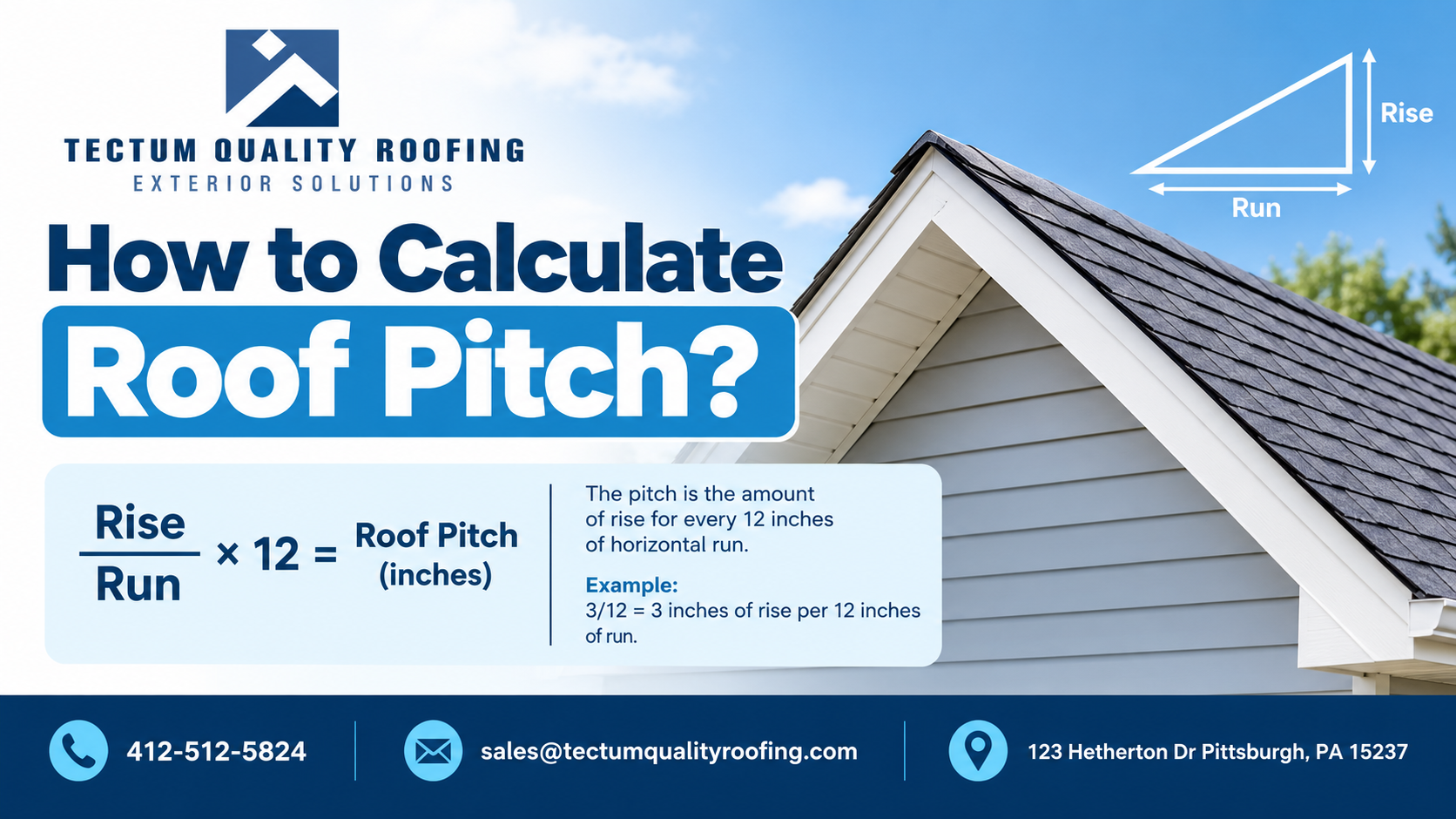
Roof pitch is one of the most important measurements to understand when inspecting, repairing, or replacing a roof. It tells you how steep or shallow a roof is and can affect everything from water drainage to roofing material selection.
If you are wondering how to calculate roof pitch, the good news is that the basic calculation is fairly simple. You need to know two measurements: the vertical rise and the horizontal run. Once you have these measurements, you can determine the roof slope and identify the pitch.
Understanding your roof pitch can also help when discussing a roof replacement with a professional roofing contractor in Pittsburgh.
What Is Roof Pitch and Why Does It Matter?
Roof pitch describes how much a roof rises compared with the horizontal distance it covers. It is commonly written as a ratio, such as 3:12, 4:12, or 6:12.
For example, a 4:12 roof pitch means that the roof rises 4 inches for every 12 inches of horizontal run.
Roof pitch matters because it can affect:
- Water and snow runoff
- Roofing material selection
- Installation requirements
- Roof accessibility
- Drainage
- Labor and safety requirements
- Overall roof design
A steep roof generally allows water to move away from the roof surface more quickly, while a shallow roof requires careful attention to drainage and roofing system installation.
What Is the Difference Between Roof Pitch and Roof Slope?
The terms roof pitch and roof slope are often used interchangeably, but there is a technical difference.
Roof slope is generally expressed as the amount of rise compared with the horizontal run. For example, a roof that rises 6 inches over a 12-inch run has a 6:12 slope.
Roof pitch has traditionally been associated with the relationship between the roof’s rise and its total span. However, in everyday roofing conversations, contractors and homeowners commonly use “pitch” to describe the rise-over-run ratio.
For homeowners, the important point is that both terms describe how steep the roof is, but the calculation may be expressed differently depending on the context.
How to Calculate Roof Pitch Using Rise and Run
The easiest way to calculate roof pitch is to measure the roof’s rise over a 12-inch horizontal run.
The basic formula is:
Roof slope = rise ÷ run
For example, suppose a roof rises 6 inches over a horizontal distance of 12 inches.
That gives you:
6 inches rise ÷ 12 inches run = 6:12 roof pitch
Here are a few common examples:
- 2 inches rise over 12 inches = 2:12
- 3 inches rise over 12 inches = 3:12
- 4 inches rise over 12 inches = 4:12
- 5 inches rise over 12 inches = 5:12
- 6 inches rise over 12 inches = 6:12
- 8 inches rise over 12 inches = 8:12
The higher the first number, the steeper the roof.
How to Measure Roof Pitch From Inside the Attic
You do not necessarily need to climb onto your roof to determine its pitch. If your attic is accessible, you can often measure the roof from underneath.
Start by finding an exposed rafter or the underside of the roof deck. Place a level horizontally along the rafter.
Measure 12 inches along the level. At the 12-inch point, measure vertically from the level down to the roof surface or rafter.
The vertical measurement tells you the roof’s rise.
For example, if you measure 4 inches of vertical rise over a 12-inch horizontal run, your roof has a 4:12 pitch.
This method can be much safer than walking on the roof, particularly if the roof is steep, wet, damaged, or difficult to access.
How to Calculate Roof Pitch From the Roof Surface
Roof pitch can also be measured from the roof surface using a level and tape measure. However, homeowners should be cautious about climbing onto a roof just to take measurements.
If the roof is safely accessible, place a level horizontally and measure a 12-inch run. Then measure the vertical rise at the end of that 12-inch distance.
For example:
12-inch run + 3-inch rise = 3:12 roof pitch
If the roof is high, steep, damaged, or difficult to access, it is better to have a roofing professional perform the measurement.
A professional can determine the pitch while also checking for damaged shingles, flashing problems, leaks, poor drainage, and other roofing concerns.
How to Calculate Roof Pitch From the Roof’s Span and Rise
You can also determine the roof pitch if you know the roof’s total span and vertical rise.
This method works particularly well with a symmetrical gable roof.
Suppose a home has a roof span of 24 feet. The horizontal run from the outside wall to the center ridge would be half of the total span:
24 feet ÷ 2 = 12 feet
If the roof rises 6 feet from the wall to the ridge, the calculation becomes:
6 feet rise ÷ 12 feet run = 6:12
So the roof has a 6:12 slope.
This method is useful when measurements of the overall roof structure are available, although complicated roof designs may require professional measurements.
How to Convert Roof Pitch Into Degrees
Some homeowners and roofing professionals prefer to describe roof steepness using degrees instead of a pitch ratio.
Here are several common roof pitches and their approximate angles:
| Roof Pitch | Approximate Angle |
| 2:12 | 9.46° |
| 3:12 | 14.04° |
| 4:12 | 18.43° |
| 5:12 | 22.62° |
| 6:12 | 26.57° |
| 8:12 | 33.69° |
| 10:12 | 39.81° |
| 12:12 | 45° |
For example, a 6:12 roof pitch has an angle of approximately 26.57 degrees.
Knowing the angle can be useful when comparing different roof designs, but most residential roofing measurements are commonly discussed using the rise-over-run format.
How Roof Pitch Affects Roofing Materials
Roof pitch is an important consideration when choosing roofing materials. Different roofing systems have different minimum slope requirements.
Asphalt shingles, metal roofing, and low-slope roofing systems may require different installation methods depending on the roof’s slope.
For example, a shallow roof may need specific underlayment, flashing, or roofing products designed for lower slopes. A steep roof may require additional safety measures during installation.
This is why you should not select a roofing material based only on appearance. The material must be suitable for the roof pitch and installed according to the manufacturer’s requirements.
A professional roofing contractor can measure the roof and help determine which roofing systems are appropriate.
How Roof Pitch Affects Roof Replacement Cost
Roof pitch can also influence the cost of a roof replacement.
A roof with a simple, low-to-moderate slope may be easier for a roofing crew to access. A steep roof can require additional safety equipment, protection systems, and installation time.
However, pitch is only one part of the overall cost.
Other factors include:
- Total roof size
- Roofing material
- Number of roof sections
- Valleys and hips
- Chimneys and roof penetrations
- Existing roof damage
- Decking condition
- Flashing requirements
- Accessibility
- Tear-off and disposal
This is why an accurate estimate should be based on an inspection rather than roof pitch alone.
What Roof Pitch Is Best for Pittsburgh Weather?
Pittsburgh homes experience rain, snow, wind, temperature changes, and occasional severe storms. A properly designed roof needs to handle these conditions while directing water away from the structure.
Roof pitch can affect how rain and snow move across the roofing surface. However, there is no single pitch that is ideal for every Pittsburgh home.
The right roofing system depends on the home’s design, existing roof structure, roofing material, drainage system, and installation quality.
If you are considering a roof replacement, a professional inspection can help determine whether the existing pitch and roofing system are appropriate for your home.
When Should You Have a Roofing Contractor Calculate the Pitch?
Calculating roof pitch is useful when planning a roofing project, but it should not be the only reason to have your roof inspected.
A professional roofing contractor can measure the pitch while also checking the condition of the entire roofing system.
Consider scheduling an inspection if you notice:
- Missing or damaged shingles
- Roof leaks
- Water stains on ceilings or walls
- Damaged flashing
- Sagging areas
- Poor drainage
- Storm or hail damage
- Excessive granule loss
- An aging roof
- Signs of moisture in the attic
For complex roofs, multi-level homes, steep slopes, or damaged roofing, professional measurement is the safer option.
Get Your Roof Pitch and Condition Checked by Tectum Quality Roofing
Knowing how to calculate roof pitch can help you understand your home and communicate more clearly with a roofing contractor. However, the pitch is only one part of a complete roof evaluation.
Tectum Quality Roofing provides professional roofing services for homeowners in Pittsburgh and surrounding areas. Our team can evaluate your roof pitch, inspect roofing materials, identify damage, and recommend the appropriate repair or replacement options.
If you are planning a roof replacement, dealing with a leak, or simply want to know whether your current roof is ready for another season, let a professional take a closer look.
Contact Tectum Quality Roofing today to schedule a roof inspection and request your free estimate.
Frequently Asked Questions
- How do you calculate roof pitch?
Measure the vertical rise over a horizontal run. A roof that rises 4 inches for every 12 inches of horizontal run has a 4:12 pitch.
- What is the formula for calculating roof pitch?
The basic calculation is rise ÷ run. The result is commonly expressed as the number of inches the roof rises over a 12-inch horizontal run.
- How do I calculate roof pitch without getting on the roof?
You can often calculate it from inside the attic using a level and tape measure. Measure a 12-inch horizontal run and then measure the vertical rise at the end of that run.
- What is a 3:12 roof pitch?
A 3:12 roof pitch means the roof rises 3 inches for every 12 inches of horizontal run. It has an angle of approximately 14.04 degrees.
- What is a 4:12 roof pitch?
A 4:12 roof pitch rises 4 inches for every 12 inches of horizontal run. Its angle is approximately 18.43 degrees.
- What is a 6:12 roof pitch?
A 6:12 roof pitch rises 6 inches for every 12 inches of horizontal run and has an angle of approximately 26.57 degrees.
- Does roof pitch affect roofing material?
Yes. Different roofing materials have different minimum slope requirements and installation specifications. The roof pitch should be checked before selecting a roofing system.
- Does roof pitch affect the cost of a new roof?
Yes, it can. Steeper or more complicated roofs may require additional labor, safety equipment, and installation time. Roof size, materials, accessibility, and existing damage also affect the final cost.
- Can I calculate the pitch of a hip roof?
Yes, but a hip roof has multiple sloping sections, so measuring it can be more complicated than measuring a simple gable roof. A professional can determine the pitch of each section when necessary.
- Is it safe to measure roof pitch myself?
If you can measure it safely from an attic or another accessible location, you may not need to climb onto the roof. Avoid walking on a roof that is steep, wet, damaged, or otherwise unsafe.
- Why does roof pitch matter during a roof replacement?
Roof pitch can affect material selection, installation methods, drainage, labor, and safety requirements. Knowing the pitch helps a roofing contractor select an appropriate roofing system and provide a more accurate estimate.