

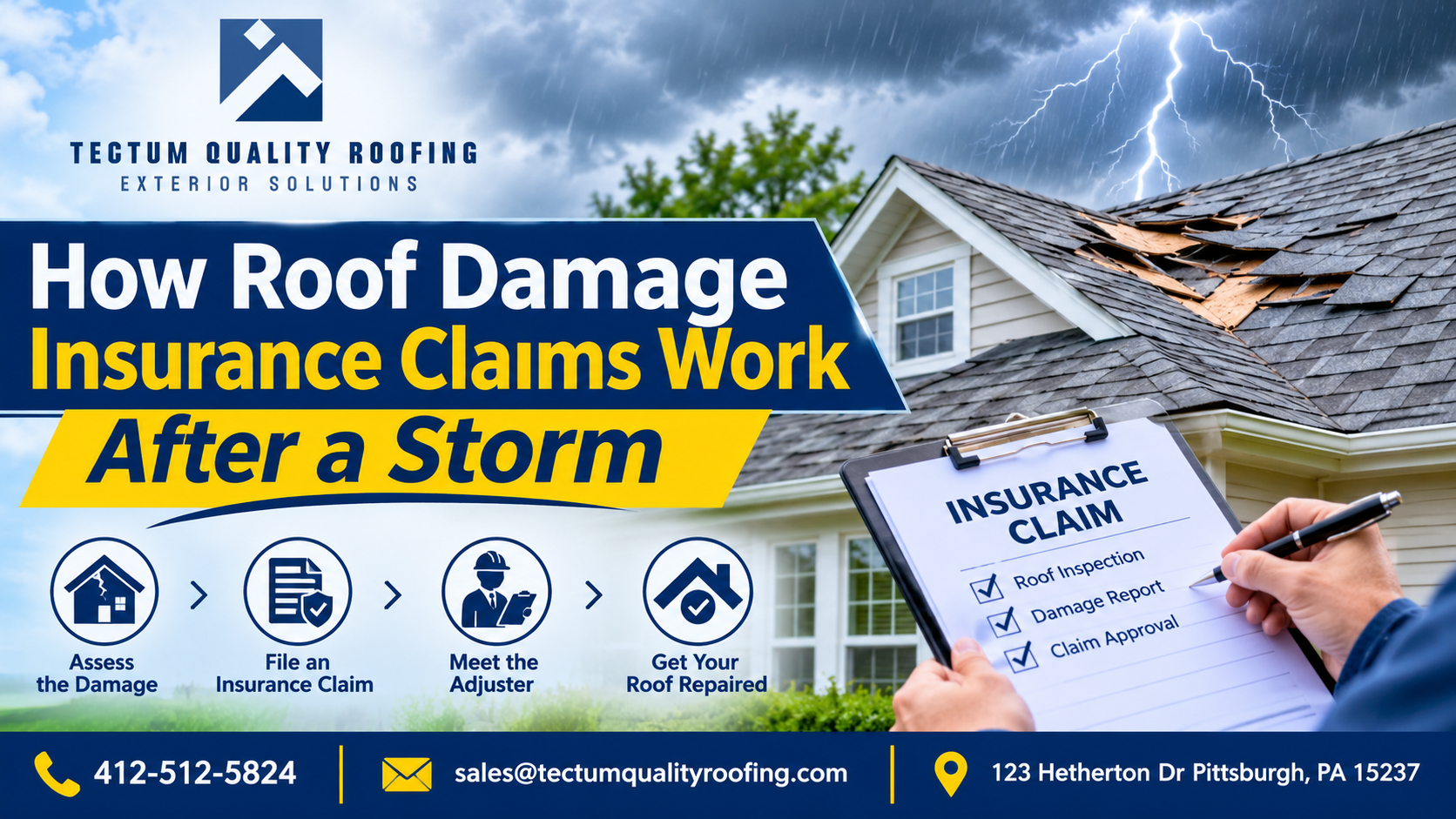
A severe storm can cause significant damage to your roof without you immediately noticing it. High winds can loosen or remove shingles, hail can create dents and cracks, and heavy rainfall can expose weak areas that lead to roof leaks. Even minor-looking damage can turn into a bigger problem if it is not addressed promptly.
For homeowners in Pittsburgh, PA, understanding how roof damage insurance claims work after a storm can make the recovery process much easier. Knowing what to document, when to contact your insurance company, and how to work with a professional roofing contractor can help you avoid unnecessary delays and costly mistakes.
However, filing a roof damage insurance claim is not always straightforward. Insurance companies review the cause of damage, policy coverage, deductibles, exclusions, and supporting documentation before deciding whether a claim qualifies for payment.
At Tectum Quality Roofing, we understand how stressful storm-related roof damage can be. This guide explains the roof insurance claims process, what homeowners should expect, and how professional roofing assistance can help protect their property.
1. Inspect Your Roof for Storm Damage
The first step after a storm is checking your property for visible signs of roof damage. Strong winds, hail, falling branches, and heavy rainfall can affect different parts of your roofing system.
Some damage is easy to notice, while other problems may require a professional roof inspection.
Look for these common signs of storm damage:
- Missing, loose, or lifted roof shingles.
- Cracked, bruised, or damaged shingles.
- Dents or impact marks on metal roofing components.
- Damaged flashing around chimneys and vents.
- Water stains on ceilings and interior walls.
- Granules collecting in gutters and downspouts.
- Loose gutters, damaged soffits, or fascia.
- Water entering the attic or roof structure.
Do not climb onto your roof to inspect damage yourself, especially when the surface is wet or unstable. Instead, check the property from the ground and arrange a professional roof inspection.
Identifying storm damage early can help prevent further water intrusion and give you useful documentation if you decide to file an insurance claim.
2. Understand What Your Homeowners Insurance Policy Covers
Before submitting a roof damage insurance claim, review your homeowners insurance policy to understand what types of damage are covered.
Many homeowners insurance policies cover sudden and accidental roof damage caused by certain events, including:
Wind Damage: Strong winds may lift, loosen, or remove shingles, exposing the underlying roofing materials.
Hail Damage: Hailstones can damage asphalt shingles, metal roofing, flashing, and other roof components.
Falling Trees or Branches: A tree or large branch falling onto your roof may cause structural damage and water penetration.
Storm-Related Water Damage: Depending on the policy and circumstances, resulting interior water damage from a covered roof opening may also qualify for coverage.
However, not every roofing problem is covered.
Insurance policies commonly exclude or limit coverage for issues such as:
- Normal wear and tear.
- Gradual deterioration.
- Neglected roof maintenance.
- Pre-existing damage.
- Certain types of water intrusion.
- Damage specifically excluded by the policy.
Some policies also use actual cash value or replacement cost value when calculating covered roof damage. These payment methods can produce different claim amounts.
Always read your policy carefully and contact your insurance provider if you are unsure about your coverage.
3. Document the Roof Damage Before Filing a Claim
Documentation plays an important role in the roof insurance claims process. Your insurance company may request photographs, videos, inspection findings, and other evidence to evaluate the reported damage.
Before temporary repairs or permanent restoration begin, document the visible condition of your property whenever it is safe to do so.
What should you document?
- Photographs of missing or damaged shingles.
- Visible hail damage on gutters and metal surfaces.
- Fallen branches or debris around the property.
- Interior ceiling stains and water damage.
- Damaged gutters, siding, and other exterior components.
- The approximate date and time of the storm.
- Any temporary repairs completed after the incident.
Keep copies of repair receipts and communications with your insurance company.
If possible, arrange a professional roofing inspection to identify damage that may not be visible from the ground.
Detailed documentation can help support your claim and provide a clearer picture of the property’s condition after the storm.
4. Schedule a Professional Roof Inspection
A professional roof inspection can help determine the extent of storm damage and whether repairs or replacement may be necessary.
Experienced roofing contractors know where to look for damage caused by wind, hail, and heavy rain. They can inspect shingles, flashing, roof valleys, vents, gutters, and other important components.
During the inspection, a roofing professional may identify:
- Missing or displaced shingles.
- Hail impact marks and damaged roofing surfaces.
- Compromised flashing and roof penetrations.
- Water infiltration and moisture-related issues.
- Damage to the underlying roof structure.
- Areas that may require immediate temporary protection.
Ask the contractor for photographs and a written inspection report when available.
At Tectum Quality Roofing, our team helps residential and commercial property owners evaluate roofing conditions and understand the repairs that may be needed after severe weather.
A professional inspection can also help you understand the difference between storm-related damage and existing roofing deterioration.
5. Contact Your Insurance Company and Start the Claim
Once you have identified potential storm damage, contact your insurance company or insurance agent to report the incident.
Your insurer will explain how to submit the claim and what information is required.
Although the process varies between insurance providers, you will generally need to provide:
- Your policy and claim information.
- The date of the storm.
- A description of the damage.
- Photographs and supporting documentation.
- Information about any emergency repairs.
- Roofing inspection findings, if available.
After receiving your claim, the insurance company will typically assign a claim number and explain the next steps.
Important: Report the damage as soon as reasonably possible. Insurance policies may have reporting requirements or deadlines, so do not wait unnecessarily.
Keep a record of every conversation, email, inspection appointment, and document submitted to your insurer.
6. Understand the Insurance Adjuster’s Roof Inspection
After a claim is submitted, your insurance company may assign an adjuster to inspect the property and assess the reported damage.
The adjuster’s role is to investigate the loss, evaluate the damage, and determine what is covered under your insurance policy.
During the inspection, the adjuster may:
- Examine the roof’s visible condition.
- Check for wind or hail damage.
- Review photographs and supporting documents.
- Evaluate the estimated repair or replacement costs.
- Consider policy exclusions and applicable deductibles.
You can ask your roofing contractor to be present during the inspection, if permitted by the insurer and local requirements.
Having a contractor available can help you understand the roofing issues being discussed and identify areas that may need further evaluation.
Remember, the insurance adjuster represents the insurance company. The contractor provides a separate roofing assessment. Their responsibilities are different, and the insurance company makes the coverage decision.
7. Review the Insurance Claim Approval and Settlement
Once the inspection and claim review are complete, your insurance company will communicate its decision.
There are several possible outcomes.
Claim Approved: If the reported damage is covered under your policy, the insurer may approve payment for eligible repairs or replacement.
Partially Approved: The insurance company may approve some repairs while excluding other items due to policy limitations, pre-existing damage, or other factors.
Claim Denied: If the damage is not covered or does not meet the policy requirements, the insurer may deny the claim and explain its reasoning.
If your claim is approved, carefully review the settlement estimate.
Pay attention to:
- Approved repair or replacement work.
- Roofing material and labor allowances.
- Your applicable deductible.
- Depreciation deductions, if any.
- Recoverable depreciation requirements.
- Additional costs that may not be covered.
For example, some replacement cost policies initially issue an actual cash value payment and release recoverable depreciation after qualifying repairs are completed and required documentation is submitted. This depends on the specific policy.
If you disagree with the settlement, ask the insurance company for a written explanation and discuss the available review or appeal process.
8. Complete the Necessary Roof Repairs or Replacement
Once the insurance process is sufficiently clear, the next step is arranging the required roofing work.
Depending on the extent of the damage, your property may need minor repairs, partial restoration, or a complete roof replacement.
A professional roofing contractor can help you understand the scope of work and prepare an estimate for the necessary repairs.
Common storm-related roofing services include:
- Replacing missing or damaged shingles.
- Repairing damaged flashing.
- Addressing roof leaks and water infiltration.
- Repairing damaged gutters and roof components.
- Replacing severely damaged roofing systems.
- Restoring commercial flat roofing systems.
Make sure the completed work matches the agreed scope and applicable building requirements.
Keep photographs, invoices, material details, and completion records. Your insurance company may request these documents before releasing any remaining recoverable depreciation.
Do not assume that an insurance approval means every additional repair or upgrade will automatically be covered. Obtain approval for changes when required by your insurer.
9. What Happens If Your Roof Insurance Claim Is Denied?
Not every storm damage insurance claim receives approval. Sometimes, an insurance company may determine that the damage resulted from normal wear and tear, poor maintenance, or a condition excluded under the policy.
However, a denied claim does not always mean there are no further options.
If your roof insurance claim is denied or partially approved, consider the following steps:
- Request a written explanation: Ask your insurance company to explain why the claim was denied or which repairs were excluded.
- Review your policy: Check the coverage terms, exclusions, deductible, and claim requirements.
- Compare the inspection findings: Review the insurance adjuster’s report alongside your roofing contractor’s inspection documentation.
- Submit additional evidence: If you have relevant photographs, repair records, or inspection findings, ask your insurer whether they can be considered.
- Ask about the appeal process: Follow your insurer’s procedures for requesting a review or disputing the decision.
If disagreements continue, you may consider contacting a licensed public adjuster or seeking guidance from the Pennsylvania Insurance Department.
A public adjuster works for the policyholder and may assist with reviewing and negotiating a claim. Hiring one is optional, and their services generally involve a fee.
10. How to Avoid Roofing Insurance Scams After a Storm
Unfortunately, storm damage often attracts unreliable contractors who take advantage of homeowners dealing with urgent repairs.
Some may promise guaranteed insurance approval, offer to waive your deductible, or pressure you into signing an agreement before you understand the scope of work.
Before hiring a roofing contractor, follow these precautions:
- Verify the company’s business information and Pennsylvania Home Improvement Contractor registration when applicable.
- Ask for proof of insurance.
- Check customer reviews and previous roofing projects.
- Request detailed written estimates.
- Avoid contractors who guarantee insurance claim approval.
- Never sign blank or incomplete documents.
- Do not pay the full project cost before the work is completed.
- Understand your insurance deductible and payment responsibilities.
Also remember that a roofing contractor and a public adjuster have different responsibilities. A roofing contractor can inspect your roof, estimate repair costs, and complete the restoration work. A licensed public adjuster can represent you in negotiating your insurance claim.
Choosing a reputable roofing company helps you avoid unnecessary complications while protecting your property.
Why Choose Tectum Quality Roofing for Storm Damage Roof Repairs?
Storm damage can leave your property vulnerable to leaks, moisture intrusion, and further structural problems. Getting the right roofing professional involved can help you understand the damage and determine the next steps.
At Tectum Quality Roofing, we provide residential and commercial roofing solutions for property owners in Pittsburgh, PA, and surrounding areas.
With more than 25 years of experience, our team understands the importance of reliable roofing workmanship, quality materials, and clear communication.
Whether your property has missing shingles, damaged flashing, roof leaks, or storm-related roofing problems, we can help assess its condition and discuss suitable repair or replacement solutions.
Our roofing services include:
- Residential roof repair and replacement.
- Commercial roofing solutions.
- Storm and hail damage roof repairs.
- Asphalt shingle roofing.
- Metal roofing systems.
- Flat roofing solutions.
- EPDM and TPO roofing.
- Roof inspections and maintenance.
We focus on providing practical roofing recommendations based on your property’s actual condition rather than suggesting unnecessary work.
If a recent storm has affected your roof, do not wait for a small leak to become a major repair issue.
Need Professional Storm Damage Roof Inspection in Pittsburgh?
Protect your home or commercial property with professional roofing assistance from Tectum Quality Roofing.
Our team can assess visible roof damage, explain suitable repair options, and provide an estimate for the necessary roofing work.
Contact Tectum Quality Roofing for an Estimate
Frequently Asked Questions (FAQs)
1. Does homeowners insurance cover roof damage caused by storms?
Many homeowners insurance policies cover sudden roof damage caused by covered events such as wind and hail. However, coverage depends on your specific policy, exclusions, deductible, and the cause of damage. Normal wear and tear and neglected maintenance are commonly excluded.
2. How long does a roof damage insurance claim take?
The timeline varies depending on the insurance company, extent of damage, documentation, and complexity of the claim. Some claims are resolved relatively quickly, while others require additional inspections, estimates, or reviews.
3. Should I call a roofing contractor or my insurance company first?
You can contact your insurance company to report the damage and arrange a professional roofing inspection around the same time. A roofing contractor can help identify visible damage and provide repair estimates, while your insurer determines policy coverage.
4. What happens if my roof insurance claim is approved?
If your claim is approved, your insurer will explain the covered repairs, settlement amount, deductible, and any applicable depreciation. You can then coordinate the approved roofing work with a qualified contractor and submit required completion documents.
5. Can I get my roof replaced through a storm damage insurance claim?
Yes, a complete roof replacement may be covered when the storm causes qualifying damage that cannot reasonably be repaired. However, replacement is not guaranteed. The insurance company evaluates the damage and determines coverage according to your policy.
6. Can a roofing contractor help with my insurance claim?
A roofing contractor can inspect storm damage, provide photographs, prepare repair estimates, and explain the roofing work required. However, the contractor cannot guarantee insurance approval or make coverage decisions on behalf of your insurer.
7. What should I do if my roof starts leaking after a storm?
Document the damage, contact your insurance company, and arrange professional assistance. Take reasonable steps to prevent additional water damage, such as temporary roof covering by a qualified professional. Keep all repair receipts and avoid permanent repairs before coordinating with your insurer about its inspection requirements.