

Your roof works around the clock. It protects your home from rain, wind, snow, scorching sun, and everything in between. Yet, it’s one of the most overlooked parts of a house until something goes wrong.
One of the most common questions homeowners ask is, “How long should my roof last?” The answer isn’t as simple as a number. While every roofing material has an expected roof lifespan, several hidden factors can shorten or extend those years.
Understanding what affects your roof can help you avoid expensive surprises and make informed decisions about maintenance and roof replacement before major damage occurs.
What Is the Average Roof Lifespan?
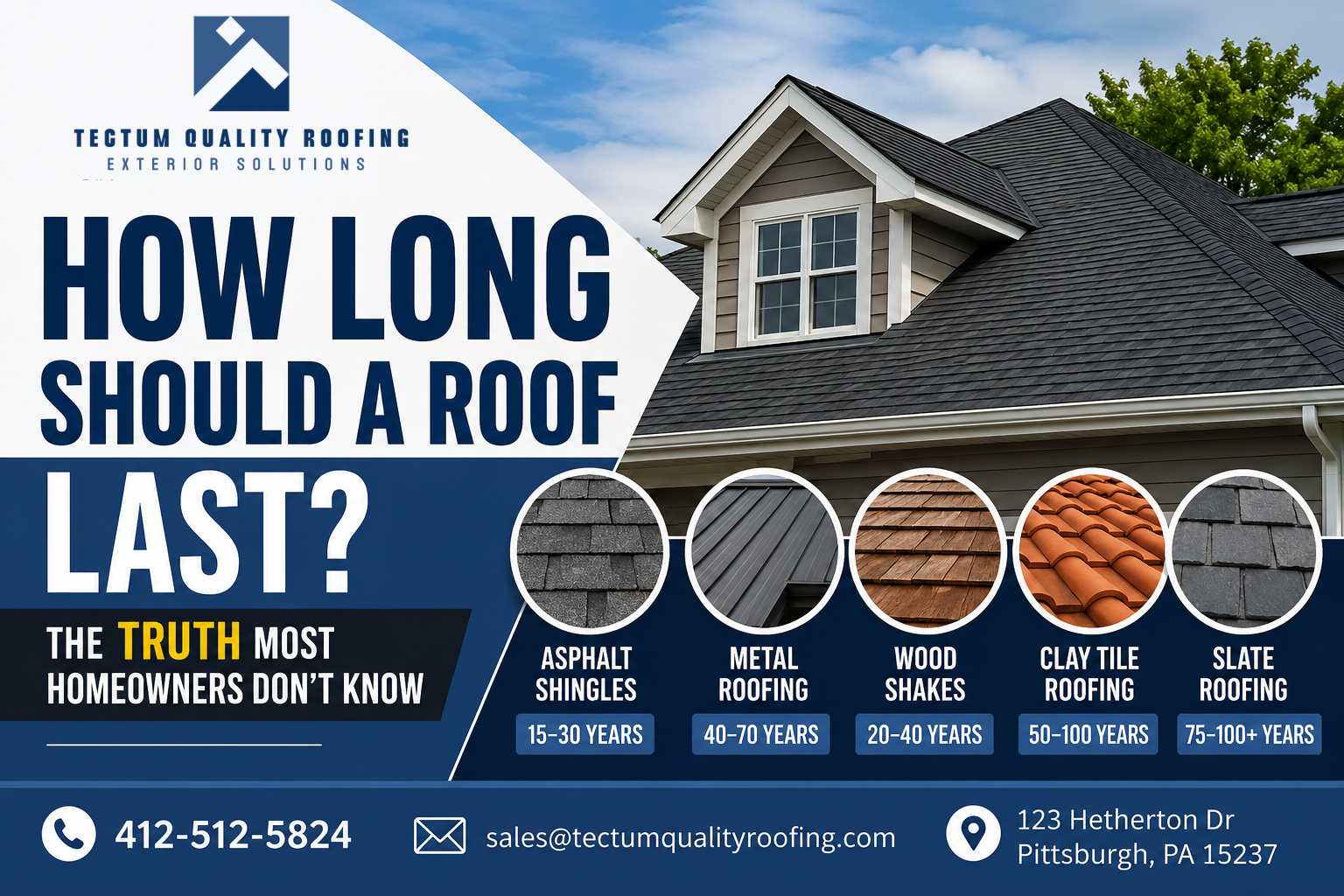
The expected lifespan of a roof depends largely on the material used. Here’s a general guideline:
- Asphalt shingles: 20–30 years
- Architectural shingles: 25–40 years
- Metal roofing: 40–70 years
- Tile roofs: 50–100 years
- Slate roofs: 75–100+ years
These estimates assume proper installation and routine maintenance. A poorly installed roof or one that is neglected may fail years before it reaches its expected lifespan.
The Truth Most Homeowners Don’t Know
Many people believe that if their roof isn’t leaking, it’s in good shape. Unfortunately, that’s not always true.
Roofs often develop hidden issues long before visible leaks appear. Moisture can become trapped beneath shingles, flashing can loosen, and ventilation problems can quietly damage the roof structure over time.
By the time water stains appear on your ceiling, the problem may already require extensive repairs.
That’s why regular roof inspections are just as important as routine maintenance for other major home systems.
Factors That Affect Roof Lifespan
No two roofs age the same way. Several factors influence how long your roof will perform.
Climate and Weather
Homes exposed to severe weather naturally experience more wear and tear.
Frequent storms, hail, strong winds, heavy snowfall, and intense UV rays can gradually weaken roofing materials. Temperature fluctuations also cause expansion and contraction, leading to cracks and damaged shingles.
Installation Quality
Even premium roofing materials won’t last if they’re installed incorrectly.
Proper underlayment, flashing, ventilation, and fastening techniques all play a critical role in maximizing your roof lifespan. Choosing experienced roofing professionals helps ensure your investment performs as intended.
Ventilation
Poor attic ventilation is one of the most common causes of premature roof failure.
Without adequate airflow, heat and moisture build up inside the attic. Over time, this can warp decking, damage shingles, encourage mold growth, and reduce the life expectancy of the entire roofing system.
Maintenance
Simple maintenance goes a long way.
Cleaning gutters, removing debris, trimming overhanging branches, and scheduling regular inspections help identify small problems before they become major repairs.
Visit- Tectum Quality Roofing, Pittsburgh Roofing Projects
Warning Signs Your Roof May Be Near the End
Even if your roof hasn’t reached its expected age, certain signs indicate it may be time for a professional evaluation.
Watch for:
- Missing or curling shingles
- Granules collecting in gutters
- Frequent leaks
- Sagging roof sections
- Cracked flashing
- Moss or algae growth
- Daylight visible in the attic
- Rising energy bills caused by poor insulation or ventilation
Ignoring these warning signs can allow minor damage to spread throughout your home.
Should You Repair or Schedule a Roof Replacement?
Not every roofing issue requires a full replacement.
If damage is isolated and your roof is relatively new, repairs may be the most cost-effective option.
However, if your roof is approaching the end of its expected lifespan, has widespread damage, or requires frequent repairs, investing in a complete roof replacement often provides greater long-term value.
A new roof offers benefits beyond leak protection, including:
- Improved energy efficiency
- Increased property value
- Better curb appeal
- Stronger weather protection
- Lower long-term maintenance costs
An experienced roofing contractor can inspect your roof and recommend the most practical solution based on its condition.
Can You Extend Your Roof Lifespan?
Absolutely.
Homeowners who take a proactive approach often get several additional years from their roofs.
Some of the best ways to extend your roof lifespan include:
- Schedule professional inspections every year.
- Repair minor damage promptly.
- Keep gutters clean and flowing properly.
- Remove branches that hang over the roof.
- Ensure proper attic ventilation.
- Address storm damage as soon as possible.
Preventive care is almost always less expensive than emergency repairs.
Don’t Wait Until a Leak Appears
One of the biggest mistakes homeowners make is waiting until water enters the home before calling a roofing professional.
Many roofing problems develop gradually and remain hidden for months—or even years. Regular inspections help catch these issues early, protecting both your roof and the structure beneath it.
Whether your roof is approaching the end of its expected life or you’re simply unsure about its condition, a professional assessment provides valuable peace of mind.
Protect Your Home with Expert Roofing Solutions
Your roof is one of the most important investments in your home. Understanding its expected roof lifespan allows you to plan ahead, avoid costly surprises, and make smart maintenance decisions.
If you’re noticing signs of aging or wondering whether it’s time for a roof replacement, the experienced team at Tectum Quality Roofing is ready to help. A thorough roof inspection can identify potential issues early and provide honest recommendations tailored to your home’s needs.
Protect your investment today by scheduling a professional roof evaluation and keeping your home safe for years to come.