

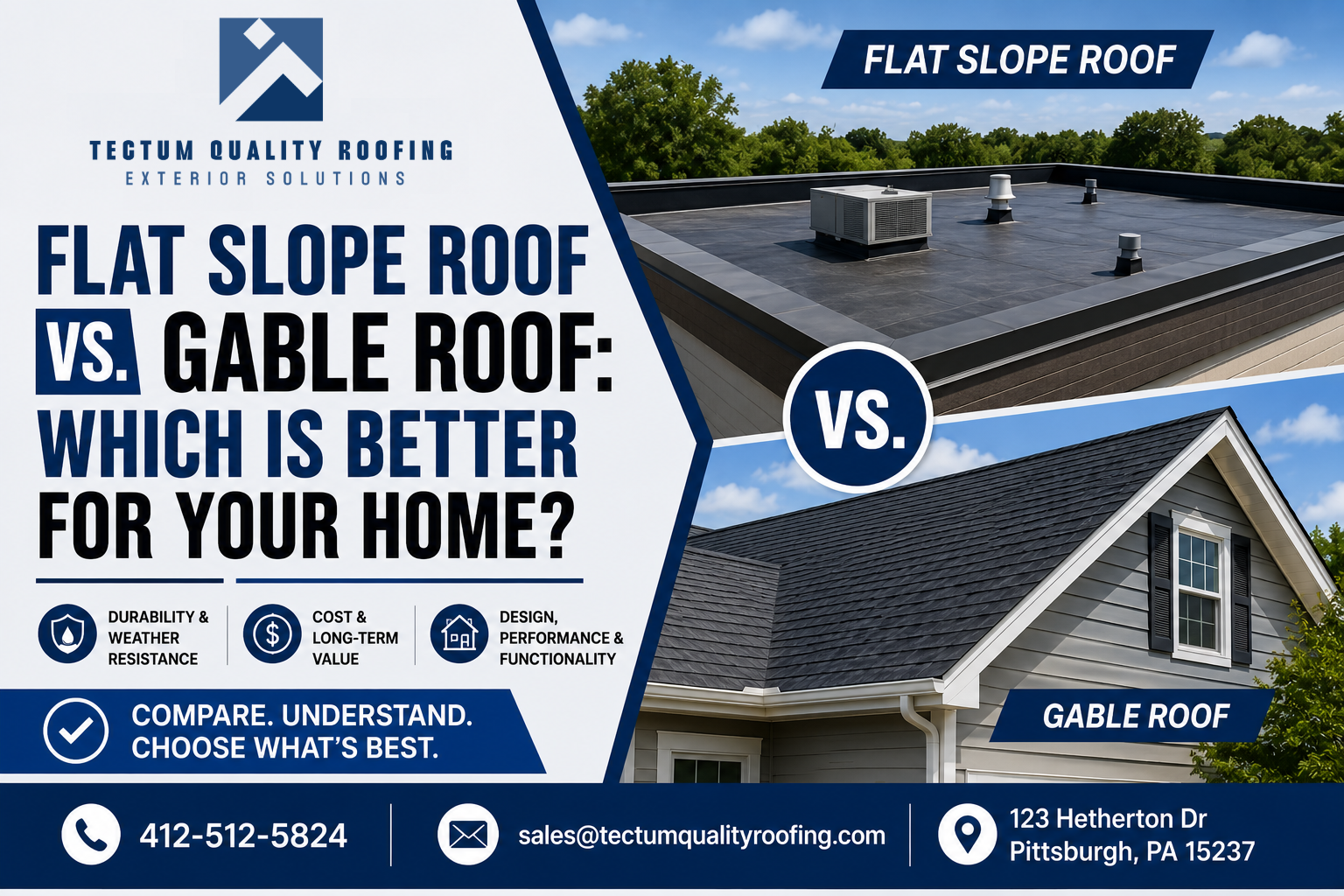
Flat Slope Roof vs. Gable Roof: Which Is Better for Your Home?
When planning a new roof, homeowners often compare a flat slope roof with a gable roof. Both styles have advantages, but the right choice depends on your home’s design, local weather, maintenance needs, and budget.
So, do flat slope roofs perform better than gable roofs? Not necessarily. Each roof style handles water, wind, heat, and maintenance differently. Understanding those differences can help you choose a roof that works well for your property.
What Is a Flat Slope Roof?
A flat slope roof has a very low pitch rather than being completely level. It is commonly used on modern homes, extensions, garages, and commercial buildings.
The low profile gives the building a clean, contemporary appearance. It can also provide useful space for rooftop equipment, solar panels, or outdoor areas when the structure is properly designed.
However, drainage is especially important. Even a small amount of standing water can cause problems if the roof does not have suitable drainage and waterproofing.
What Is a Gable Roof?
A gable roof has two sloping sides that meet at a central ridge, creating a triangular shape at each end of the building. It is one of the most common roof designs because it is simple, practical, and suitable for many architectural styles.
The slope allows rainwater and debris to run off naturally. A steeper pitch can also provide additional attic space and improve ventilation.
For homes in areas that experience heavy rainfall, a well-designed gable roof can be a particularly practical choice.
Flat Slope Roof vs. Gable Roof
The main difference between the two is how they handle water and weather.
A flat slope roof has a low pitch, so it relies more heavily on carefully designed drainage systems. A gable roof uses gravity to move rainwater toward the roof edges, which can make drainage simpler.
Here are some important factors to consider:
1. Water Drainage
Gable roofs generally have an advantage when it comes to natural water runoff. Their angled surfaces allow rainwater to flow away quickly.
A flat slope roof can still perform well, but it needs proper slopes, drains, gutters, flashing, and waterproofing. Poor drainage can lead to leaks and premature deterioration.
2. Weather Conditions
Your local climate should play a major role in your decision. Gable roofs can perform well in rainy climates because of their sloping surfaces. However, their large roof faces can be more exposed to strong winds.
Flat slope roofs have less overall height and can be suitable for modern construction, but their performance depends heavily on waterproofing and drainage details.
3. Maintenance
Both roof types require regular inspections.
A flat slope roof may need closer attention to drains, waterproof membranes, flashing, and areas where water could collect. Leaves and other debris should also be removed regularly.
A gable roof typically has simpler drainage, although gutters, shingles or tiles, flashing, and ridge components still need inspection.
4. Cost
The cost of a roof depends on its size, materials, structure, labor, insulation, and design. A flat slope roof can sometimes be economical because its simpler shape may require less structural framing.
A gable roof can also be cost-effective because it is a straightforward design that many roofing contractors are experienced in installing.
Rather than choosing based only on the initial price, consider long-term maintenance and repair costs.
5. Appearance
A flat slope roof is often chosen for contemporary and minimalist homes. Its low profile can create a sleek architectural appearance.
A gable roof has a more traditional look and works well with many home designs. Its shape can also add visual height and character to a property.
Are Flat Slope Roofs Better Than Gable Roofs?
There is no universal winner. A flat slope roof can be the better option for a modern home where appearance, usable rooftop space, and a low-profile design are priorities.
A gable roof may be the better choice when natural water runoff, attic space, and a traditional appearance are more important.
The quality of the installation matters just as much as the roof style. A properly designed and installed roof can provide reliable protection for many years, while poor workmanship can cause problems regardless of the design.
Which Roof Should You Choose?
Before making a decision, consider your local weather, building design, roof pitch, drainage requirements, material options, maintenance expectations, and budget.
It is also worth having a qualified roofing professional inspect the property before construction begins. They can determine which roof structure is appropriate for the building and explain the drainage and ventilation requirements.
Final Thoughts
So, do flat slope roofs perform better than gable roofs? The answer depends on the property and the conditions it needs to withstand.
A flat slope roof can be an excellent choice for modern architecture and low-profile designs, while a gable roof offers natural drainage, a familiar appearance, and useful attic space. The best option is the one that matches your home’s structure, climate, and long-term needs.