

Introduction
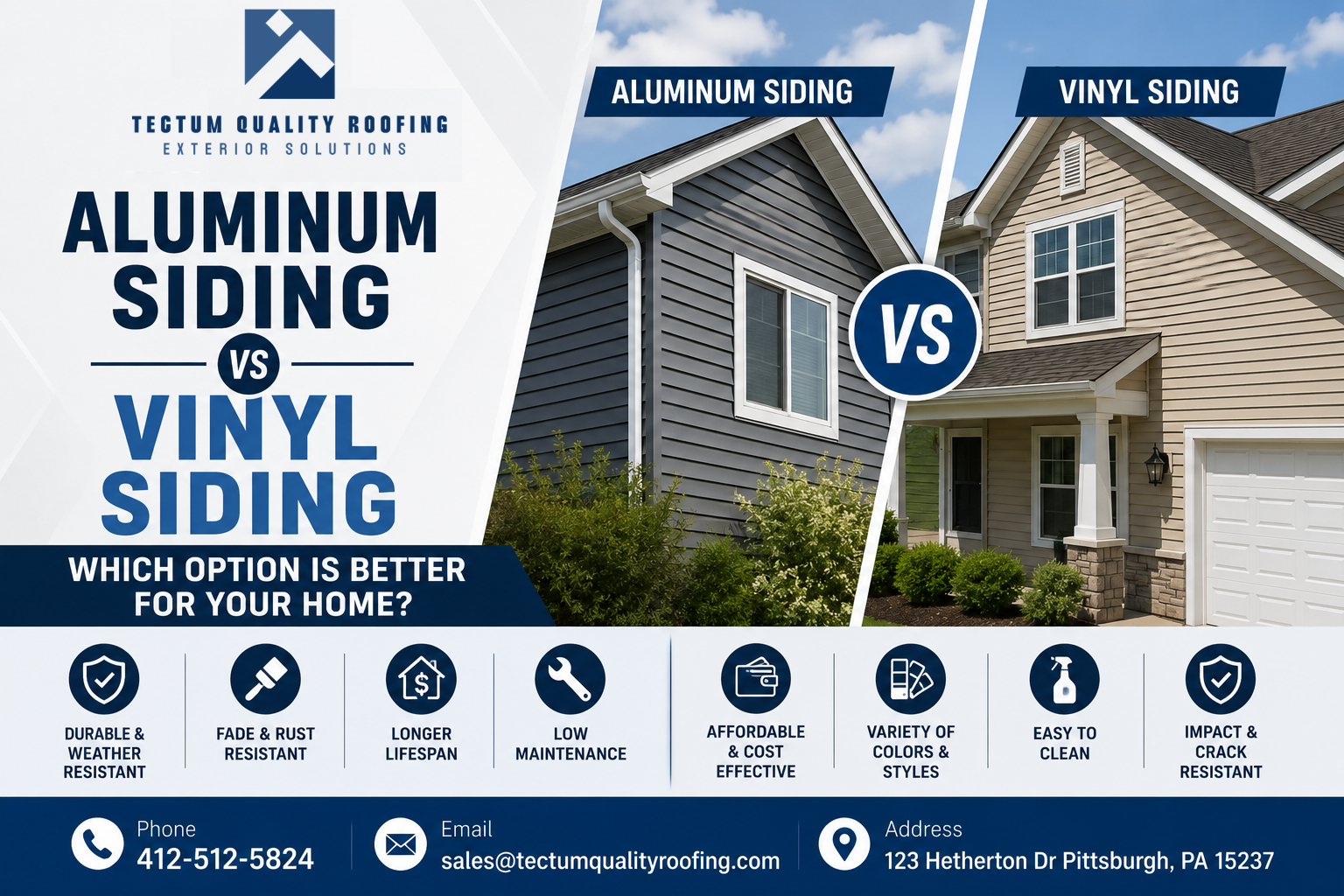
Your home’s siding does much more than improve curb appeal. It protects your property from harsh weather, helps with energy efficiency, and adds long-term value to your investment. If you’re planning a siding replacement, one of the biggest decisions you’ll face is choosing between aluminum siding and vinyl siding.
Both materials have been trusted by homeowners for decades, but each offers different advantages depending on your budget, climate, maintenance preferences, and design goals. Understanding the differences can help you make a smart decision that benefits your home exterior for years to come.
In this guide, we’ll compare aluminum siding and vinyl siding, highlight their pros and cons, and explain how working with a qualified contractor can help you achieve lasting results.
Aluminum Siding vs Vinyl Siding: Understanding the Basics
Before comparing features, it’s helpful to know what each material offers.
Aluminum siding is made from lightweight metal panels designed to withstand changing weather conditions. It has been a popular option for residential and commercial buildings because of its strength and resistance to fire and pests.
Vinyl siding is manufactured from durable PVC material and has become one of the most common siding choices in the United States. It is valued for its affordability, wide selection of colors, and low maintenance requirements.
Both products provide reliable protection, but the right choice depends on your property’s specific needs.
Comparing Aluminum Siding and Vinyl Siding
- Durability
When durability matters, aluminum siding performs exceptionally well against moisture, insects, and fire. It does not rot or attract termites, making it a dependable choice in many climates.
However, aluminum can dent if struck by hail, tree branches, or other impacts.
Vinyl siding resists cracking under normal conditions and won’t rust or corrode. Modern products are manufactured to withstand everyday weather, although extreme temperature changes may cause occasional cracking or warping.
- Maintenance Requirements
Many homeowners prefer materials that require minimal upkeep.
Vinyl siding generally needs only occasional washing with water and mild detergent to keep it looking clean.
Aluminum siding also requires regular cleaning but may eventually need repainting to maintain its appearance after years of exposure to sunlight and weather.
If reducing long-term maintenance is a priority, vinyl often has the advantage.
- Appearance and Design Options
Today’s homeowners want a home exterior that reflects their personal style.
Vinyl siding is available in a large variety of colors, textures, and profiles, including options that resemble natural wood.
Aluminum siding provides a clean, modern appearance and can also be painted if you decide to update your home’s look in the future.
Both materials can significantly improve curb appeal when professionally installed.
- Energy Efficiency
While siding itself contributes to your home’s protection, insulated siding systems can improve overall energy efficiency.
Many vinyl products include insulated backing that helps reduce heat transfer.
Aluminum siding performs well when combined with quality insulation installed beneath the panels, making proper installation especially important during a siding replacement project.
- Cost Considerations
Budget is often one of the biggest deciding factors.
Vinyl siding typically has a lower upfront cost, making it an attractive option for homeowners looking for an affordable upgrade.
Aluminum siding generally costs more initially but offers excellent longevity and durability, especially in areas where fire resistance or moisture protection is important.
Rather than focusing only on installation cost, consider the overall value, expected lifespan, and future maintenance expenses.
Which Siding Works Best for Different Homes?
Every property has unique needs.
Aluminum siding may be the better choice if you:
- Live in humid or coastal areas
- Want excellent fire resistance
- Prefer a material that won’t attract insects
- Plan to repaint your exterior in the future
Vinyl siding may be the better choice if you:
- Want a lower installation cost
- Prefer minimal maintenance
- Like having many color and style options
- Need a fast and efficient installation
A professional inspection can help determine which material best suits your home’s structure and local weather conditions.
Unique Section: Signs It’s Time for a Siding Replacement
Sometimes the biggest question isn’t which material to choose it’s whether your current siding should be replaced.
Watch for these warning signs:
- Cracked, warped, or loose siding panels
- Peeling paint caused by trapped moisture
- Mold or mildew growing on exterior walls
- Higher heating and cooling costs
- Water stains inside the home
- Fading that cannot be restored with cleaning
Addressing these problems early helps protect your home exterior from costly structural damage while improving your property’s appearance and value.
Proper Licensing, Insurance, and Certifications
Whether you choose aluminum siding or vinyl siding, hiring the right contractor is just as important as selecting the material.
Look for a company that offers:
- Proper state licensing where required
- General liability insurance
- Workers’ compensation coverage
- Manufacturer-approved installation practices
- Written estimates and workmanship warranties
Choosing a qualified contractor helps ensure your siding replacement is completed safely, meets local building requirements, and delivers long-lasting performance.
Why Professional Installation Makes a Difference
Even premium siding materials can underperform if they’re installed incorrectly.
Professional installers carefully inspect the existing structure, identify hidden moisture issues, install proper weather barriers, and ensure every panel is securely aligned.
This attention to detail helps improve durability, weather resistance, and the overall appearance of your home exterior while reducing the risk of future repairs.
Working with an established roofing and exterior contractor also gives homeowners added confidence through dependable service and ongoing support.
Conclusion
Choosing between aluminum siding and vinyl siding comes down to your priorities. If you value exceptional durability, fire resistance, and long-term strength, aluminum siding is a strong investment. If affordability, low maintenance, and design flexibility are at the top of your list, vinyl siding remains an outstanding option.
Every property is different, and the best decision starts with a professional evaluation. A trusted contractor can assess your home’s condition, discuss your goals, and recommend the ideal solution for your budget and long-term needs.
If you’re considering a siding replacement, the team at Tectum Quality Roofing is ready to help you protect and enhance your home exterior with quality workmanship and dependable service. Contact us today to schedule a consultation and receive personalized recommendations for your next exterior improvement project.