

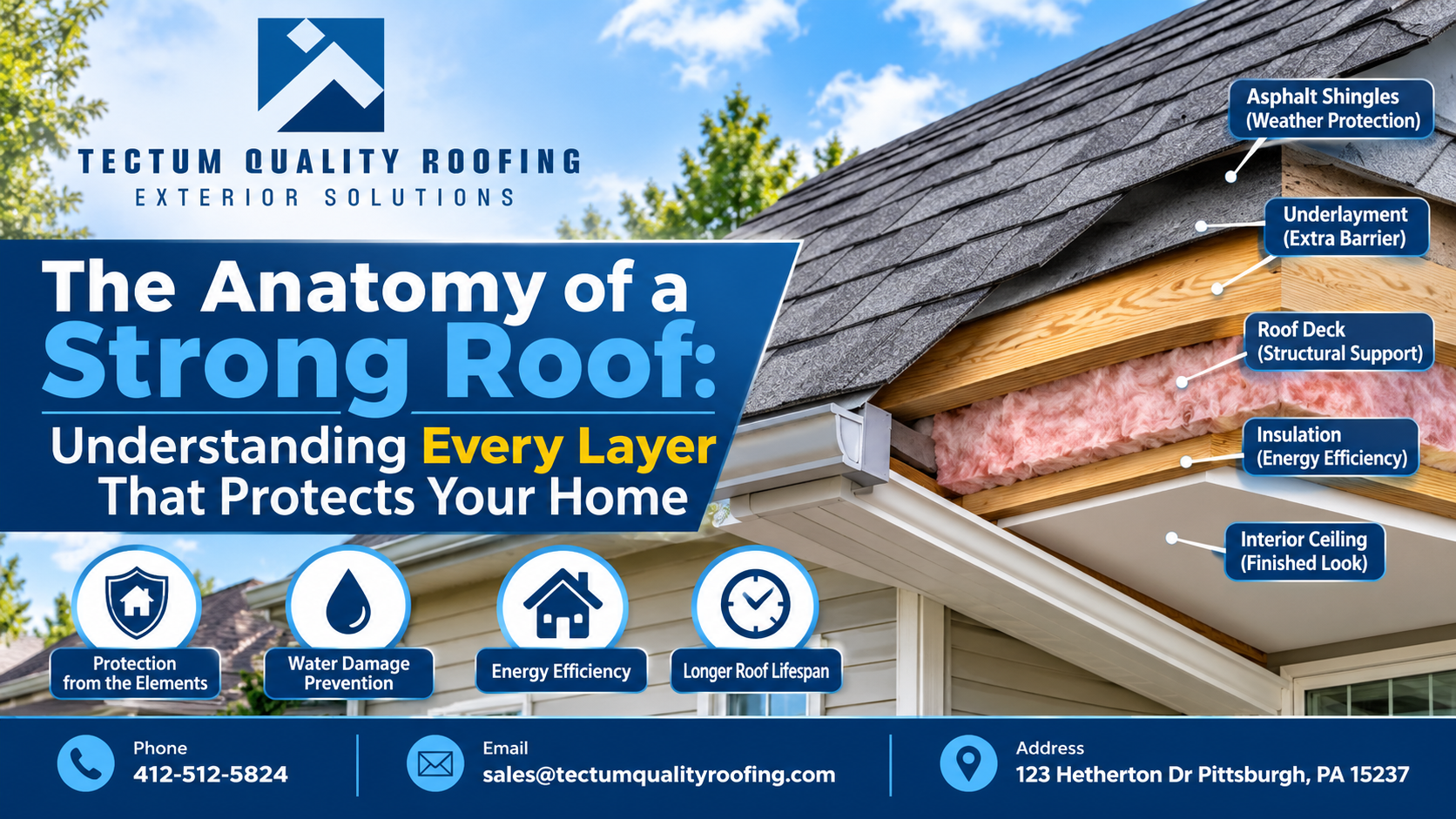
Your roof is one of the most important parts of your home, but have you ever wondered what actually makes it strong enough to protect your property from rain, snow, wind, and changing temperatures?
A roof is much more than the shingles or roofing material you see from the outside. It is a complete roofing system made up of multiple layers and components, each serving a specific purpose. From the roof decking and underlayment to flashing, ventilation, and shingles, every part works together to keep moisture out and maintain the structural integrity of your home.
For homeowners in Pittsburgh, PA, understanding how these roofing layers work is particularly important. Seasonal temperature changes, heavy rainfall, snowfall, and strong winds can put continuous pressure on roofing systems.
Whether you are planning a new roof installation, considering a roof replacement, or trying to understand why your existing roof is leaking, knowing the anatomy of a strong roof can help you make better decisions.
At Tectum Quality Roofing, we believe that a properly constructed roof starts with quality materials, professional installation, and attention to every detail. Let’s look at the different layers that make up a reliable roofing system.
1. Roof Decking: The Foundation of Your Roofing System
The roof decking, also known as roof sheathing, is the structural surface attached to the roof framing. It provides the foundation on which the remaining roofing materials are installed.
Roof decking is commonly made from plywood or oriented strand board (OSB). These materials create a stable surface that supports the weight of the roofing system and helps distribute external loads.
Why Roof Decking Matters
- Provides structural support for roofing materials.
- Creates a stable base for underlayment and shingles.
- Helps distribute weight across the roof framing.
- Contributes to the overall strength of the roofing system.
Over time, roof decking can become damaged by moisture, leaks, poor ventilation, or prolonged exposure to water.
Soft spots, sagging areas, discoloration, and visible wood deterioration may indicate that the decking needs attention.
During a roof replacement, a professional roofing contractor should inspect the decking and identify any damaged sections before installing new materials.
2. Drip Edge: Directing Water Away From Vulnerable Roof Areas
The drip edge is a metal flashing component installed along the edges of the roof, typically at the eaves and rakes.
Although it may look like a small detail, it plays an important role in protecting the roof edges and directing water toward the gutters instead of allowing it to reach the underlying roof structure.
Benefits of a Properly Installed Drip Edge
- Helps direct rainwater away from the fascia.
- Reduces the risk of water reaching exposed roof edges.
- Helps protect the underlying roof decking.
- Supports proper drainage into the gutter system.
Without proper drip edge installation, water can travel along roof edges and contribute to moisture damage over time.
This component is especially important in areas like Pittsburgh, where regular rainfall and seasonal weather can expose roofing edges to moisture.
3. Ice and Water Shield: An Extra Barrier Against Moisture
Ice and water shield is a self-adhering waterproof membrane installed in vulnerable areas of certain roofing systems.
It is designed to provide additional protection against water intrusion, particularly where ice dams or wind-driven rain may create problems.
It is commonly installed along roof eaves, valleys, and around roof penetrations, depending on local building requirements and the roofing design.
Why Ice and Water Shield Is Important
- Provides additional waterproofing protection.
- Helps protect vulnerable roof areas.
- Reduces the risk of water entering through certain roof details.
- Offers added protection against ice-dam-related water intrusion.
For Pittsburgh homeowners, ice and water protection can be particularly valuable because winter conditions may create ice buildup along roof edges.
Proper placement and installation are important for this layer to perform effectively.
4. Roofing Underlayment: The Secondary Protective Barrier
Roofing underlayment is a protective layer installed over the roof decking and beneath the outer roofing material.
Even though shingles or metal panels provide the primary weather-resistant surface, underlayment offers an additional layer of protection if water gets beneath the exterior covering.
There are different types of roofing underlayment, including:
Asphalt-Saturated Felt: A traditional underlayment option used beneath many roofing systems.
Synthetic Underlayment: A modern alternative designed to provide durability, strength, and resistance to moisture during installation and throughout the roofing system’s service life.
Self-Adhering Underlayment: A specialized membrane used in areas requiring additional protection against water infiltration.
Benefits of Roofing Underlayment
- Provides secondary moisture protection.
- Helps protect the roof decking.
- Adds protection during roofing installation.
- Supports the overall performance of the roofing system.
The right underlayment depends on the roofing material, roof pitch, local building codes, and manufacturer’s installation requirements.
5. Starter Shingles: Protecting the Roof Edges
Starter shingles are installed along the lower edges of a shingle roof before the main field shingles.
They create a secure starting point for the first course of shingles and help protect areas that are especially exposed to wind-driven rain.
Starter shingles generally include an adhesive strip designed to help hold the first row of roofing shingles in position.
Why Starter Shingles Matter
- Help secure the first row of shingles.
- Reduce the risk of wind lifting roof edges.
- Provide additional protection along eaves and rakes.
- Support proper shingle alignment.
Skipping or incorrectly installing starter shingles can leave vulnerable roof edges exposed.
Even small installation details like this can affect the long-term performance of a roofing system.
6. Roofing Shingles or Exterior Roofing Material: The First Line of Defense
The outer roofing material is the most visible part of your roof. It provides the primary weather-resistant surface and contributes significantly to your property’s appearance.
For residential properties, asphalt shingles are among the most common roofing choices. Other options include metal roofing, slate, and wood shingles.
Each material has different installation requirements, costs, maintenance needs, and expected service life.
- Asphalt Shingles
Asphalt shingles are popular because they offer an affordable combination of appearance, durability, and practical performance.
- Metal Roofing
Metal roofing is known for its durability, relatively low maintenance requirements, and long service life when properly installed.
- Slate Roofing
Natural slate offers a distinctive appearance and can last for many decades with appropriate installation and maintenance.
- Wood Shingles and Shakes
Wood roofing provides a natural appearance but requires careful maintenance and consideration of moisture and fire-related requirements.
Choosing the right roofing material depends on your budget, architectural style, roof structure, and local weather conditions.
If you are considering a new roof, explore Tectum Quality Roofing’s residential and commercial roofing services to understand the roofing solutions available for your property.
7. Flashing: Protecting the Most Vulnerable Roof Connections
Roof flashing is one of the most important components of a leak-resistant roofing system.
It consists of metal or other approved waterproofing materials installed around areas where the roof meets another surface or where roofing penetrations occur.
Common flashing locations include:
- Chimneys.
- Skylights.
- Roof valleys.
- Plumbing vents.
- Roof-to-wall connections.
- Roof edges and other transitions.
These areas are more vulnerable to water infiltration because they interrupt the continuous roofing surface.
Why Proper Flashing Installation Matters
- Directs water away from vulnerable connections.
- Helps prevent leaks around chimneys and skylights.
- Protects roof valleys and wall intersections.
- Reduces the risk of moisture reaching the roof decking.
Damaged, loose, corroded, or incorrectly installed flashing can allow water to enter even when the surrounding shingles look perfectly fine.
If you notice water stains near a chimney, skylight, or ceiling corner, flashing problems may be one of the possible causes.
8. Roof Ventilation: Maintaining Proper Airflow
A strong roof needs more than weather-resistant materials. Proper ventilation is also essential for maintaining a healthy roofing system.
Roof ventilation allows outside air to enter through intake vents and warm, moist air to escape through exhaust vents.
Common roof ventilation components include soffit vents, ridge vents, gable vents, and other approved ventilation systems.
Benefits of Proper Roof Ventilation
- Helps manage heat buildup in the attic.
- Reduces excessive moisture accumulation.
- Supports better attic air circulation.
- Helps reduce conditions that contribute to ice dams.
- Can help protect roofing materials and the underlying roof structure.
Poor ventilation can contribute to excessive attic heat, condensation, moisture-related deterioration, and reduced roofing material performance.
For Pittsburgh homes, proper attic ventilation is particularly important because seasonal temperature changes can create challenging conditions for roofing systems.
A roofing professional can evaluate your existing ventilation and determine whether additional intake or exhaust ventilation is needed.
9. Roof Insulation: Supporting Indoor Comfort and Energy Efficiency
Roof insulation helps reduce heat transfer between your living space and the outside environment.
Although insulation is generally installed at the attic floor or along the roof assembly rather than directly above the shingles, it is an important part of the overall building envelope.
Common insulation materials include fiberglass, cellulose, and spray foam.
Why Roof and Attic Insulation Matter
- Helps maintain comfortable indoor temperatures.
- Reduces unwanted heat transfer.
- Can help lower heating and cooling demands.
- Supports overall home energy efficiency.
- Works alongside proper ventilation to manage moisture and temperature conditions.
Insulation and ventilation should be designed to work together. Adding insulation without addressing ventilation or existing moisture problems can create unwanted conditions in some roof assemblies.
If your home experiences uneven indoor temperatures, excessive attic heat, or moisture problems, a professional assessment can help identify possible causes.
10. Gutters and Downspouts: Managing Water Away From Your Home
Although gutters and downspouts are installed along the roof edges rather than forming part of the roof’s layered assembly, they play an important role in protecting the entire roofing system.
Their primary purpose is to collect rainwater and direct it away from the roof edges, exterior walls, and foundation.
When gutters become clogged with leaves, dirt, or roofing debris, water can overflow and create moisture-related problems.
Benefits of Proper Gutter Function
- Directs rainwater away from the foundation.
- Helps prevent water overflow near roof edges.
- Reduces moisture exposure around fascia and siding.
- Supports proper roof drainage.
- Helps protect landscaping and exterior surfaces.
Regular gutter inspections and cleaning are important, particularly after storms and during the fall season.
How Do All These Roof Layers Work Together?
Each roofing component has a specific job, but the real strength of a roofing system comes from how all the parts work together.
Consider what happens when rain reaches your roof:
- Roofing shingles or panels provide the primary weather-resistant exterior surface.
- Flashing and roof details help direct water away from vulnerable connections.
- Underlayment and ice and water protection provide additional barriers against moisture.
- Roof decking provides the structural surface supporting the roofing assembly.
- Roof framing supports the overall roof structure and transfers loads to the building.
- Ventilation and insulation help manage attic temperature, airflow, and moisture.
- Gutters and downspouts collect and direct rainwater away from the property.
When these components are properly selected and installed, they work together to protect your home from moisture, weather exposure, and premature deterioration.
However, if one component fails, it can affect the performance of other parts of the roofing system.
That is why professional installation and regular inspections are important.
Signs Your Roofing System May Need Professional Attention
You do not need to wait until water starts dripping from your ceiling to inspect your roof.
Several warning signs can indicate that one or more roofing components are no longer performing properly.
Watch for:
- Missing, cracked, or curling shingles.
- Water stains on ceilings or walls.
- Damaged or loose roof flashing.
- Sagging roof sections.
- Granules accumulating in gutters.
- Moisture or mold-like growth in the attic.
- Damaged soffits or fascia.
- Poor drainage or overflowing gutters.
- Visible damage after heavy rain, hail, or strong winds.
If you notice any of these problems, arranging a professional roof inspection can help identify the source before the damage becomes more extensive.
For homeowners looking for dependable roof repair services in Pittsburgh, addressing problems early can help prevent more expensive restoration work.
Why Professional Roof Installation Makes a Difference
Even the best roofing materials cannot deliver their expected performance if they are installed incorrectly.
A roofing system requires careful attention to every layer, including decking, underlayment, flashing, ventilation, and the exterior roofing material.
Incorrect installation can create problems such as:
- Water leaks around roof penetrations.
- Premature shingle damage.
- Poor attic ventilation.
- Moisture accumulation beneath roofing materials.
- Improper drainage.
- Reduced roofing system lifespan.
Professional roofing contractors understand how these components work together and follow appropriate installation practices, manufacturer specifications, and applicable building codes.
Whether you need a minor repair or a complete roof replacement, choosing an experienced roofing company helps ensure that important details are not overlooked.
Protect Your Home With Tectum Quality Roofing
Your roof is a complete protective system, and every layer matters. From the roof decking beneath your shingles to the flashing around your chimney, each component contributes to your property’s overall protection.
At Tectum Quality Roofing, we provide residential and commercial roofing solutions for homeowners and property owners throughout Pittsburgh, PA, and surrounding communities.
With more than 25 years of construction experience, our team understands the importance of quality materials, proper installation, and dependable workmanship.
Our roofing services include:
- Residential roofing installation and replacement.
- Commercial roofing systems.
- Roof repair and maintenance.
- Asphalt shingle roofing.
- Metal roofing solutions.
- EPDM rubber membrane roofing.
- Modified bitumen roofing.
- Storm and hail damage restoration.
Whether you are dealing with a roof leak, planning a replacement, or simply want to understand the condition of your existing roofing system, our team can help you evaluate your options.
You can also view our completed roofing projects in Pittsburgh to see examples of our work.
Is Your Roof Protecting Your Home the Way It Should?
Do not overlook the small roofing components that provide long-term protection. Contact Tectum Quality Roofing to discuss your roofing concerns and request a free estimate.
Frequently Asked Questions (FAQs)
1. What are the main layers of a residential roof?
A typical residential roofing assembly includes roof decking, drip edge, underlayment, ice and water protection where required, starter shingles, exterior roofing materials, and flashing. Roof framing, ventilation, insulation, and drainage components also contribute to the overall roofing system.
2. What is the most important layer of a roof?
Every layer serves an important purpose. However, roof decking provides the structural base, underlayment offers secondary moisture protection, and the exterior roofing material provides the primary weather-resistant surface. Proper flashing and ventilation are also essential.
3. What is the purpose of roof underlayment?
Roof underlayment is installed between the roof decking and the exterior roofing material. It provides an additional protective barrier against moisture and helps protect the roof structure if water gets beneath the outer roofing material.
4. How does roof ventilation protect a home?
Proper roof ventilation helps maintain airflow through the attic, manage heat buildup, and reduce excessive moisture accumulation. A balanced ventilation system can help protect roofing materials and reduce conditions that contribute to condensation and ice dams.
5. How often should a residential roof be inspected?
A professional roof inspection is generally recommended at least once a year and after significant storms. Regular inspections can help identify missing shingles, damaged flashing, drainage problems, and other issues before they become major repairs.
6. Can damaged roof decking be replaced without replacing the entire roof?
Yes. If the damage is limited to specific areas and the remaining roofing system is in good condition, damaged roof decking may be replaced without requiring a complete roof replacement. The best approach depends on the extent of the damage and the condition of the surrounding materials.
7. What causes roof leaks even when shingles look fine?
Roof leaks can develop because of damaged flashing, failed underlayment, improperly sealed roof penetrations, deteriorated roof valleys, or other installation problems. A professional inspection can help identify the actual source of the leak.
8. Why is professional roof installation important?
Professional installation ensures that roofing components are properly fitted, sealed, and integrated. Correct installation helps prevent water intrusion, ventilation problems, premature material deterioration, and avoidable roofing repairs.