

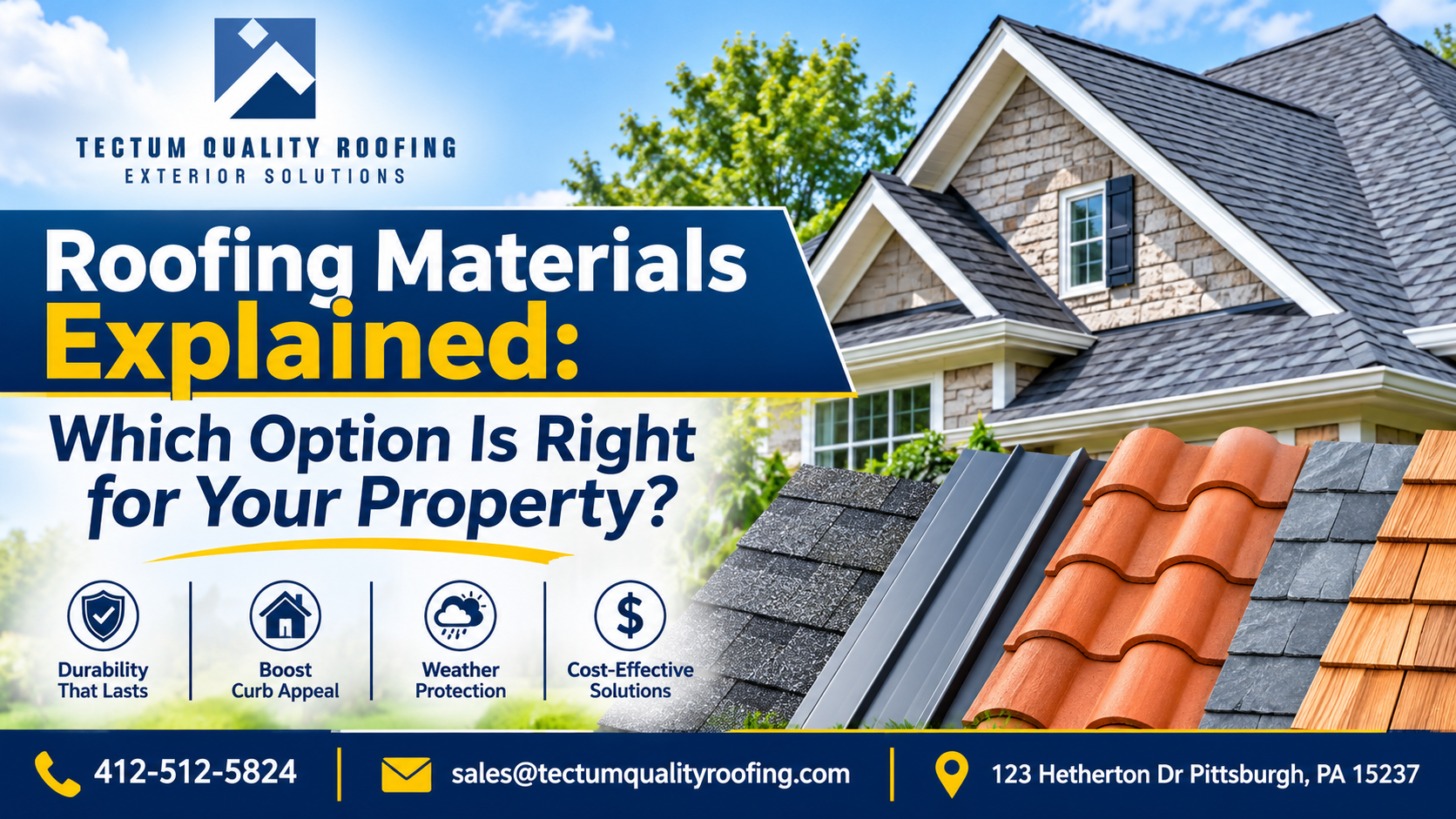
Choosing the right roofing material is one of the most important decisions when building, repairing, or replacing a roof. Your roof does more than protect your property from rain and snow. It also affects energy efficiency, curb appeal, maintenance costs, and the overall value of your home or commercial building.
With several roofing options available, deciding which material is right for your property can feel overwhelming. Asphalt shingles, metal roofing, slate, and other roofing systems each offer different benefits, costs, and maintenance requirements.
For property owners in Pittsburgh, PA, choosing the right roofing material is especially important because roofs must withstand changing weather conditions, including heavy rainfall, snow, strong winds, and seasonal temperature fluctuations.
So, which roofing material should you choose?
In this guide, we will explain the most popular roofing materials, their advantages, limitations, and ideal applications to help you make an informed decision. We will also explain how working with an experienced roofing contractor can help you choose a solution that fits your property and budget.
Why Choosing the Right Roofing Material Matters
Not all roofing materials perform the same way. Some are more affordable initially, while others offer longer service lives or require less maintenance.
The right choice depends on several factors, including your property’s structure, local climate, budget, architectural style, and long-term plans.
Here are some important things to consider:
- Durability: How well can the roofing material withstand rain, snow, wind, and temperature changes?
- Installation Cost: Does the material fit your current roofing budget?
- Lifespan: How long can you expect the roofing system to perform with proper installation and maintenance?
- Maintenance: Will the roof require frequent inspections, cleaning, or repairs?
- Appearance: Does the material complement your property’s architectural design?
- Energy Efficiency: Can the roofing system help manage heat absorption and improve building comfort?
Considering these factors before installation can help you avoid unnecessary expenses and choose a roofing system that provides lasting value.
1. Asphalt Shingles: An Affordable and Popular Roofing Option
Asphalt shingles are among the most commonly used roofing materials for residential properties in the United States. They are popular because they offer a practical combination of affordability, appearance, and reliable protection.
Available in different colors, styles, and designs, asphalt shingles can complement many types of residential architecture.
Benefits of Asphalt Shingles
- Generally more affordable than premium roofing materials.
- Available in various colors and styles.
- Relatively straightforward installation and repair.
- Suitable for many residential roofing applications.
- Individual damaged shingles can often be replaced without replacing the entire roof.
Things to Consider
Although asphalt shingles are budget-friendly, their lifespan is generally shorter than that of premium materials such as slate or properly installed metal roofing. Their performance also depends on product quality, ventilation, installation, and weather exposure.
Best For: Homeowners looking for an affordable and attractive roofing solution without a high initial investment.
If your existing shingles are cracked, curling, missing, or showing signs of wear, professional roofing services can help determine whether repairs or a complete roof replacement are the better option.
2. Metal Roofing: A Durable and Long-Term Investment
Metal roofing has become an increasingly popular choice for residential and commercial properties. It is valued for its durability, weather resistance, and relatively low maintenance requirements.
Metal roofing systems are available in different materials, including steel, aluminum, copper, and zinc. Standing seam and metal panel roofing are common styles used in modern construction.
Benefits of Metal Roofing
- Long service life when properly installed and maintained.
- Resistant to many common weather-related issues.
- Lightweight compared with some traditional roofing materials.
- Available in different colors and finishes.
- Can offer energy-efficiency benefits through reflective finishes.
- Requires relatively little routine maintenance.
Things to Consider
Metal roofing generally has a higher upfront installation cost than standard asphalt shingles. Installation also requires proper fastening, flashing, and detailing to prevent water infiltration.
You should work with a roofing contractor who understands the specific requirements of the metal roofing system you choose.
Best For: Property owners looking for a durable roofing system with long-term performance and modern appearance.
3. Slate Roofing: A Premium Option for Long-Term Performance
Slate roofing is known for its natural appearance, durability, and premium finish. Made from natural stone, slate tiles can provide a distinctive appearance that complements traditional and high-end properties.
When properly installed and maintained, natural slate roofing can last for many decades.
Benefits of Slate Roofing
- Exceptional potential lifespan.
- Natural and distinctive appearance.
- Excellent resistance to fire.
- Low routine maintenance when properly installed.
- Adds a premium architectural appearance to a property.
Things to Consider
Slate is significantly more expensive than many other roofing options. It is also heavy, meaning your property’s roof structure must be capable of supporting its weight.
Repairs can require specialized materials and experienced installers, which may increase maintenance costs.
Best For: Homeowners who prioritize premium appearance, long-term durability, and are comfortable with a higher initial investment.
4. Wood Shingles and Shakes: A Natural and Traditional Look
Wood shingles and shakes provide a natural appearance that can make residential properties stand out. Cedar is commonly used because of its appearance and natural resistance to certain forms of decay.
Wood shingles are generally machine-cut for a more uniform appearance, while wood shakes have a more textured, rustic finish.
Benefits of Wood Roofing
- Attractive natural appearance.
- Complements traditional and rustic architectural designs.
- Provides some natural insulating properties.
- Can offer a distinctive finish compared with standard roofing materials.
Things to Consider
Wood roofing requires more maintenance than many alternatives. Moisture, moss, insects, and weather exposure can affect its condition over time.
Fire resistance is another important consideration. Local building codes, fire regulations, and the availability of treated products should be reviewed before choosing this option.
Best For: Property owners who prefer a natural roofing appearance and are prepared for the additional maintenance requirements.
5. Clay and Concrete Roof Tiles: A Strong and Stylish Choice
Clay and concrete roof tiles are known for their distinctive appearance and durability. They are commonly associated with Mediterranean and Spanish-style architecture, although different designs can suit other property styles.
Clay tiles are made from fired natural clay, while concrete tiles are manufactured using cement-based materials.
Benefits of Tile Roofing
- Durable when properly installed.
- Resistant to fire.
- Available in several colors, shapes, and finishes.
- Can provide a long service life.
- Individual tiles may be replaceable when damaged.
Things to Consider
Clay and concrete tiles are heavy and may require additional structural support. Their installation can also be more expensive than asphalt shingles.
Although the tiles themselves are durable, the underlayment and flashing components still require proper installation and periodic inspection.
Best For: Property owners looking for a distinctive architectural style and a durable roofing system with appropriate structural support.
Roofing Materials Comparison: Which One Should You Choose?
Choosing between different roofing materials becomes easier when you compare their major characteristics.
| Roofing Material | Relative Initial Cost | Maintenance | Typical Lifespan |
| Asphalt Shingles | Low to moderate | Moderate | 15–30 years |
| Metal Roofing | Moderate to high | Low | 40–70 years |
| Slate Roofing | High | Low to moderate | 75–100+ years |
| Wood Shingles/Shakes | Moderate to high | High | 20–40 years |
| Clay/Concrete Tiles | High | Low to moderate | 50–100 years |
Note: Lifespans are general estimates, not guarantees. Actual performance depends on product quality, climate, installation, ventilation, maintenance, and manufacturer specifications.
Which Roofing Material Is Best for Pittsburgh, PA?
Pittsburgh properties experience different weather conditions throughout the year. Heavy rainfall, snowfall, wind, and freezing temperatures can all affect roofing performance.
When choosing roofing materials for a property in Pittsburgh, consider how well the material handles moisture, temperature changes, and seasonal weather exposure.
Here are some practical considerations:
Asphalt Shingles: A practical choice for homeowners looking for an affordable roofing option. Choose quality shingles with appropriate wind ratings and installation specifications.
Metal Roofing: A strong option for property owners who prioritize durability and want a roofing system that can handle changing weather conditions.
Slate Roofing: Suitable for properties with adequate structural support and owners looking for a premium, long-lasting roofing material.
Wood Roofing: Requires careful consideration because moisture exposure and maintenance can affect long-term performance.
Clay and Concrete Tiles: Their weight and performance in freeze-thaw conditions should be evaluated before installation.
There is no single roofing material that works best for every Pittsburgh property. The right solution depends on your roof’s structure, budget, design, and maintenance expectations.
6 Factors to Consider Before Investing in a New Roof
Before choosing a roofing system, evaluate these six important factors.
1. Your Roofing Budget
Your budget should include more than the cost of roofing materials. Consider labor, old roof removal, underlayment, flashing, ventilation improvements, and any necessary structural repairs.
A cheaper material may cost less initially but could require more frequent replacement or maintenance.
2. Your Property’s Structure
Some roofing materials are significantly heavier than others. Slate and concrete tiles, for example, may require additional structural support.
A professional inspection can help determine which materials are appropriate for your existing roof structure.
3. Local Weather Conditions
Consider how the roofing material performs under heavy rain, snow, strong winds, and changing temperatures.
For Pittsburgh homeowners, moisture management and proper roof ventilation are especially important.
4. Expected Lifespan
Think about how long you plan to own the property. If you expect to stay for many years, investing in a durable roofing system may offer better long-term value.
5. Maintenance Requirements
Every roofing material requires some level of maintenance. However, some systems need more attention than others.
Consider how much time and money you are willing to spend on inspections, cleaning, and repairs.
6. Professional Installation
Even high-quality roofing materials can fail prematurely when installed incorrectly.
Proper installation, flashing, underlayment, ventilation, and drainage all contribute to the overall performance of your roof.
Working with experienced roofing professionals helps ensure that your selected roofing system is installed according to the manufacturer’s requirements and applicable building codes.
7. Commercial Roofing Materials: EPDM, TPO, and Modified Bitumen
For commercial buildings, warehouses, offices, and other properties with flat or low-slope roofs, traditional shingles and tiles may not be suitable. These properties often require specialized roofing membranes designed to provide reliable waterproofing and protect large roof surfaces.
Tectum Quality Roofing offers several flat roofing system options.
EPDM Rubber Roofing
EPDM (Ethylene Propylene Diene Monomer) is a synthetic rubber roofing membrane widely used on commercial and low-slope roofs.
Benefits:
- Flexible in changing temperatures.
- Good resistance to weather exposure.
- Suitable for large flat roof surfaces.
- Relatively straightforward maintenance.
- Available in large membrane sheets that can reduce seams.
Best For: Commercial property owners looking for a flexible and durable flat roofing solution.
Learn more about EPDM and flat roofing services.
TPO Roofing
TPO (Thermoplastic Polyolefin) is a single-ply roofing membrane commonly used on commercial buildings. Its reflective surface can help reduce heat absorption, depending on the roof design and insulation system.
Benefits:
- Reflective surface available in light colors.
- Heat-welded seams.
- Designed for low-slope roofing applications.
- Can support energy-efficient roof designs.
Best For: Commercial property owners looking for a reflective, single-ply roofing system.
Modified Bitumen Roofing
Modified bitumen is an asphalt-based roofing material designed for flat and low-slope applications. It combines asphalt with polymer modifiers to improve flexibility and performance.
Benefits:
- Multiple installation methods.
- Suitable for many low-slope roofs.
- Can provide dependable waterproofing.
- Available in different surface finishes.
Best For: Commercial properties and buildings requiring an asphalt-based flat roofing system.
Choosing between EPDM, TPO, and modified bitumen depends on your building’s drainage, existing roof condition, insulation requirements, budget, and installation specifications.
You can explore Tectum Quality Roofing’s flat roofing solutions to learn more about available options.
8. Should You Repair Your Existing Roof or Replace It?
Choosing a roofing material is not always about selecting something new. Sometimes, your existing roofing system may only need professional repairs.
However, if your roof has widespread damage, recurring leaks, deteriorating materials, or significant structural issues, replacement may be the more practical long-term solution.
Consider roof replacement if:
- Your roof has reached the end of its expected service life.
- Shingles are missing, curling, or deteriorating across large areas.
- Water leaks continue despite previous repairs.
- Roofing materials show widespread weather damage.
- The underlying roof structure has moisture-related deterioration.
On the other hand, isolated damage, minor leaks, or a few missing shingles may be repairable without replacing the entire roof.
The best way to make this decision is to schedule a professional roof inspection.
Tectum Quality Roofing helps property owners assess their roofing conditions and understand suitable repair or replacement options. Our team focuses on recommending practical solutions based on the actual condition of your roof.
Why Choose Tectum Quality Roofing for Your Roofing Project?
Selecting the right roofing material is only one part of protecting your property. Professional installation, quality workmanship, and choosing a system suited to your building are equally important.
At Tectum Quality Roofing, we help residential and commercial property owners throughout Pittsburgh, PA, find dependable roofing and exterior solutions.
With over 25 years of construction experience, our team understands the importance of using quality materials and delivering workmanship that meets the needs of each property.
Our roofing solutions include:
- Residential roof installation and replacement.
- Commercial roofing systems.
- Asphalt shingle roofing.
- Metal roofing solutions.
- EPDM rubber membrane roofing.
- TPO and modified bitumen roofing.
- Roof repairs and storm damage restoration.
- Roof inspections and maintenance.
Whether you need a new residential roof or a dependable flat roofing system for your commercial property, we can help you evaluate the available options.
You can also view our completed roofing projects in Pittsburgh to see examples of our work.
Ready to Choose the Right Roofing Material for Your Property?
Don’t spend money on a roofing system without understanding whether it is right for your property. Let our experienced team help you evaluate your roof, compare suitable materials, and plan your next roofing project.
Frequently Asked Questions (FAQs)
1. What is the best roofing material for residential properties?
Asphalt shingles are a popular choice because they offer affordability, style options, and dependable protection. Metal roofing is another good option for homeowners prioritizing durability and long-term performance. The best material depends on your budget, roof structure, and maintenance expectations.
2. Which roofing material lasts the longest?
Natural slate can last 75–100 years or longer when properly installed and maintained. Metal roofing can also provide several decades of service. Actual lifespan depends on material quality, installation, weather exposure, and maintenance.
3. Is metal roofing better than asphalt shingles?
Metal roofing generally offers a longer service life and lower routine maintenance requirements, but it usually costs more initially. Asphalt shingles are more affordable and easier to repair. Both can be suitable depending on your property’s needs and budget.
4. What is the best roofing material for Pittsburgh weather?
Asphalt shingles and metal roofing are common choices for Pittsburgh homes. Both can provide reliable weather protection when properly selected and installed. For commercial buildings, EPDM, TPO, and modified bitumen are options worth considering for flat and low-slope roofs.
5. What is the most affordable roofing material?
Standard asphalt shingles are generally among the most affordable roofing options for residential properties. However, installation costs, roof complexity, material quality, and future maintenance should also be considered before making a decision.
6. Which roofing material is best for commercial buildings?
EPDM, TPO, and modified bitumen are commonly used for commercial flat and low-slope roofing systems. The right choice depends on drainage, insulation, building requirements, existing roof conditions, and budget.
7. How do I know when to replace my roof?
Frequent leaks, widespread shingle damage, deteriorating roofing materials, and recurring repair needs can indicate that replacement should be considered. A professional roof inspection can help determine whether repairs are sufficient or a new roof is needed.