

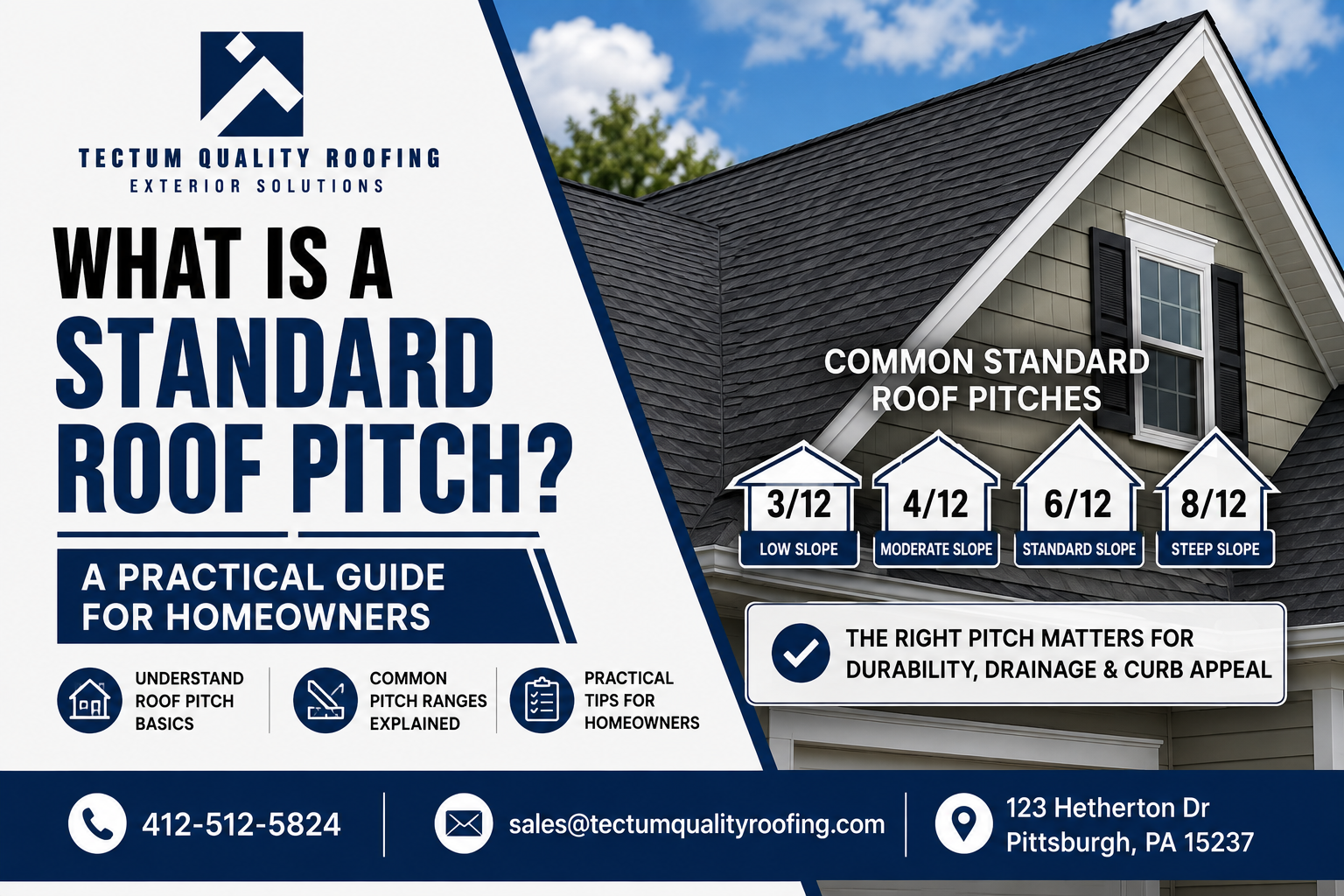
What Is a Standard Roof Pitch? A Practical Guide for Homeowners
When planning a new roof, one of the most important details to consider is the roof pitch. Roof pitch affects how your home looks, how well rain and snow drain away, the type of roofing materials you can use, and even the overall cost of the project.
But what exactly is a standard roof pitch? The answer depends on the style of the house, local weather conditions, and the roofing material. There is no single pitch that works for every home.
What Is Roof Pitch?
Roof pitch describes how steep or flat a roof is. It is usually written as a ratio that shows how many inches the roof rises vertically for every 12 inches it runs horizontally.
For example, a roof with a 6:12 pitch rises 6 inches for every 12 inches of horizontal distance. A 4:12 roof rises 4 inches over the same distance.
The higher the first number, the steeper the roof.
Some common examples include:
- 2:12: Low-slope roof
- 4:12: Moderate roof pitch
- 6:12: Common residential pitch
- 8:12: Steep roof
- 12:12: Very steep roof with a 45-degree angle
What Is a Standard Roof Pitch?
For many residential homes, a roof pitch between 4:12 and 6:12 is considered a common range. A 6:12 pitch is especially popular because it provides a good balance between appearance, drainage, accessibility, and roofing requirements.
However, the standard roof pitch can vary depending on the architectural design. Traditional homes may have a steeper roof, while modern homes often use low-slope designs.
Climate is another important factor. Areas that receive heavy rainfall or snowfall may benefit from a steeper roof because water and snow can move off the roof more easily.
Common Roof Pitch Options
a) 3:12 Roof Pitch
A 3:12 pitch is relatively low and has a more modern, subtle appearance. Certain roofing materials may require additional installation considerations at this slope.
b) 4:12 Roof Pitch
A 4:12 roof pitch is a popular choice for residential construction. It offers reasonable water drainage while keeping the roof relatively easy to work on.
c) 6:12 Roof Pitch
A 6:12 pitch is one of the most common choices for traditional residential roofs. It provides good drainage and gives a home a noticeable pitched-roof appearance without being extremely steep.
d) 8:12 Roof Pitch
An 8:12 roof is considerably steeper. It can create an attractive architectural appearance and is useful in areas where effective water or snow runoff is important. However, installation can be more difficult and may require additional safety equipment.
e) 12:12 Roof Pitch
A 12:12 roof has a 45-degree angle and creates a dramatic, steep appearance. This type of roof is often found on certain traditional, cottage, or architectural-style homes.
Why Does Roof Pitch Matter?
Choosing the right roof pitch is about more than appearance. It can affect several parts of your home.
A) Water Drainage
A properly designed pitch helps rainwater flow toward gutters and drainage systems. A steeper roof generally allows water to run off more quickly.
B) Snow Load
In snowy climates, roof design and pitch can influence how snow accumulates and sheds. However, structural design and local building requirements are equally important.
C) Roofing Materials
Different roofing materials have minimum slope requirements. Asphalt shingles, metal roofing, tile, and other materials may have different installation guidelines, so always check the manufacturer’s specifications.
D) Attic Space
A steeper roof can create additional space beneath the roof, which may be useful for an attic or vaulted ceiling. The actual usable space depends on the roof design and structural framing.
E) Appearance
The roof is one of the most visible parts of a home. A low pitch can create a clean, modern appearance, while a steeper pitch can give a property a more traditional or dramatic look.
How Do You Calculate Roof Pitch?
Calculating roof pitch is relatively simple. Measure the vertical rise of the roof over a 12-inch horizontal distance.
For example, if the roof rises 6 inches over a 12-inch run, the roof pitch is 6:12.
You can also express roof pitch as an angle. A 6:12 pitch is approximately 26.6 degrees, while a 12:12 pitch is 45 degrees.
If you are measuring an existing roof, take proper safety precautions. For a detailed assessment, it is better to have a qualified roofing professional inspect the roof.
What Roof Pitch Is Best for a House?
There isn’t one best roof pitch for every house. A 4:12 to 6:12 roof pitch is a practical range for many residential properties, but the right choice depends on several factors.
Consider your home’s architectural style, local weather, roofing material, drainage needs, attic requirements, and local building codes before choosing a pitch.
A roofing contractor or structural professional can help determine which design is appropriate for your property.
Final Thoughts
So, what is a standard roof pitch? For many residential homes, pitches around 4:12 to 6:12 are common, with 6:12 being a particularly familiar choice. However, the ideal roof pitch depends on the home’s design, climate, materials, and structural requirements.
If you’re replacing an existing roof or building a new home, don’t choose a pitch based on appearance alone. A professional can help you select a roof design that provides reliable drainage, suits your roofing material, and meets applicable building requirements.