

Introduction
Your roof protects everything beneath it, from your family’s safety to your home’s structure and belongings. While small roofing problems can often be repaired, there comes a point when patching issues only delays a much larger problem. Knowing when to invest in a roof replacement instead of another repair can help you avoid expensive interior damage, improve energy efficiency, and increase your property’s value.
Many homeowners continue repairing aging roofs because it appears to be the less expensive option. However, repeated repairs often add up quickly without solving the root problem. Understanding the warning signs can help you make the right decision before a roofing emergency occurs.
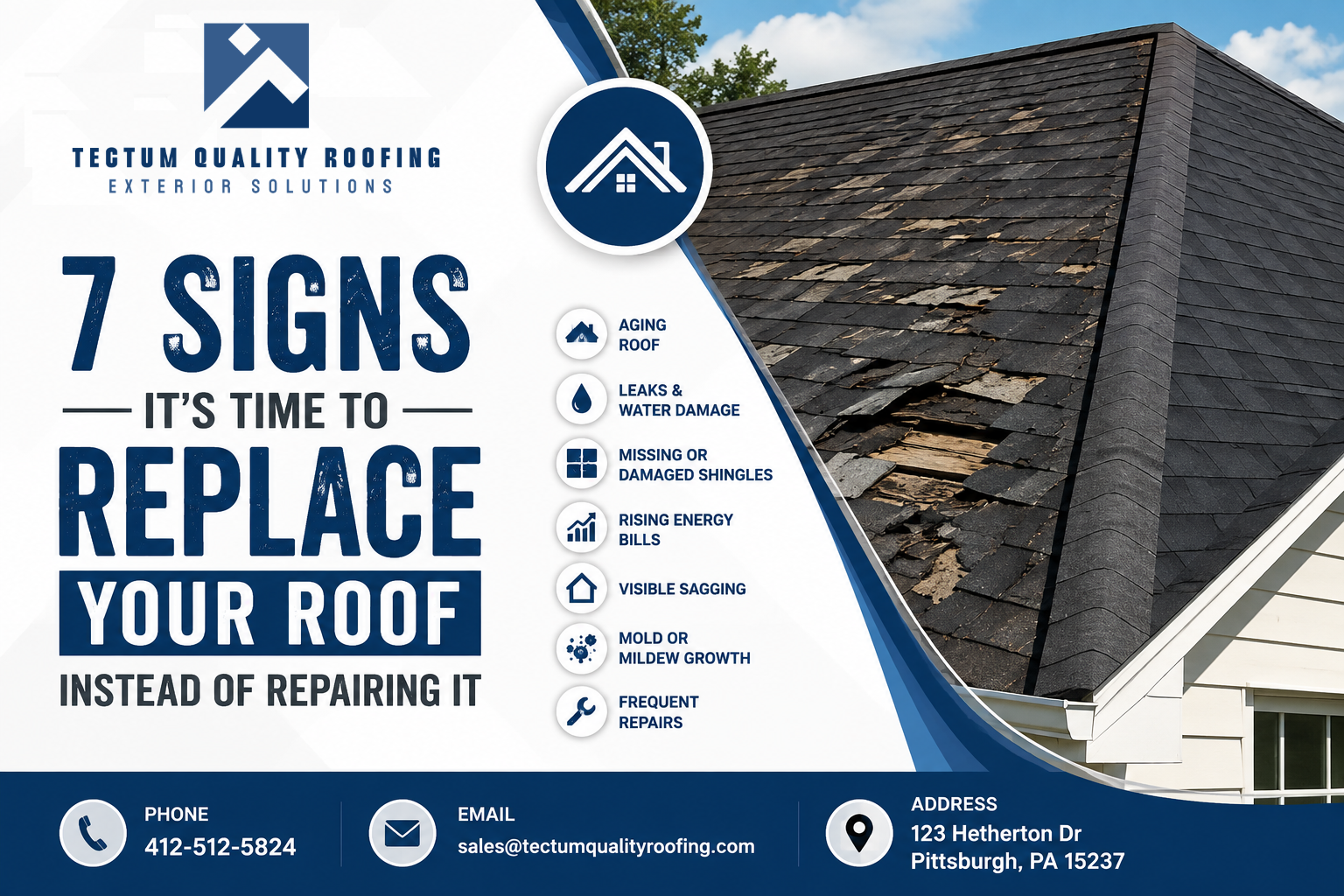
Below are seven important signs that indicate it may be time to replace old roof materials rather than continue paying for temporary fixes.
1. Your Roof Has Reached the End of Its Expected Lifespan
Every roofing material has a limited service life.
Typical lifespan includes:
- Asphalt shingles: 20-30 years
- Architectural shingles: 25-35 years
- Metal roofing: 40-70 years
- Slate and tile: 50+ years
If your roof is approaching or exceeding its expected lifespan, repairs become less effective because the entire roofing system is naturally wearing out. Even if only one section appears damaged, surrounding materials may already be deteriorating.
Scheduling a professional inspection can help determine whether investing in repairs still makes financial sense.
2. Missing, Curling, or Cracked Shingles Are Everywhere
One or two damaged shingles after a storm can usually be replaced. However, widespread deterioration is a different story.
Signs include:
- Curling edges
- Cracked shingles
- Bald spots where granules are missing
- Large sections of missing shingles
- Uneven roof surfaces
These problems often indicate that the roofing material has reached the end of its useful life.
Instead of paying for repeated patchwork repairs, a complete roof replacement restores long-term protection and helps prevent future leaks.
3. Water Leaks Keep Returning
A roof leak doesn’t always mean you need a new roof.
However, if leaks continue appearing despite multiple repairs, the problem may extend beyond individual shingles.
Repeated water intrusion can damage:
- Roof decking
- Insulation
- Drywall
- Electrical systems
- Structural framing
Ignoring recurring leaks often results in much larger repair bills inside the home.
A professional roofing inspection can determine whether replacing the roofing system is the more practical solution.
4. Your Roof Is Sagging
A sagging roof should never be ignored.
Visible dips or uneven sections may indicate:
- Rotting roof decking
- Moisture damage
- Structural weakness
- Long-term water intrusion
These issues affect the integrity of the entire roofing system and cannot usually be corrected with simple repairs.
If you notice any sagging, contact a qualified roofing contractor immediately for a thorough assessment.
A Smart Investment: Looking Beyond Immediate Roofing Cost
Many property owners hesitate because they’re concerned about roofing cost. While replacing a roof requires a larger upfront investment than a repair, it’s important to consider the long-term value.
Continuing to repair an aging roof often leads to:
- Multiple service calls
- Ongoing leak repairs
- Interior water damage
- Increased heating and cooling expenses
- Reduced property value
A new roof helps eliminate recurring repair expenses while improving energy efficiency and providing dependable protection for years to come.
When comparing costs, focus on total ownership rather than today’s repair invoice.
5. Moss, Mold, or Algae Keep Coming Back
Small amounts of moss or algae may simply require cleaning.
However, persistent biological growth can indicate trapped moisture beneath the roofing materials.
Over time, moisture causes:
- Wood rot
- Deck deterioration
- Weakened shingles
- Reduced ventilation performance
If moisture has already compromised the roof structure, cleaning alone will not solve the problem.
Replacing damaged roofing materials prevents ongoing deterioration and helps restore proper roof performance.
6. Your Energy Bills Have Increased
An aging roof affects more than weather protection.
Poor ventilation and deteriorated roofing materials allow heat to enter during summer and escape during winter.
Warning signs include:
- Higher utility bills
- Uneven indoor temperatures
- Drafty attic spaces
- Excessive attic heat
Modern roofing systems are designed with improved ventilation and energy-efficient materials that help regulate indoor temperatures more effectively.
Replacing an outdated roof may reduce monthly energy expenses while improving year-round comfort.
7. Your Home Is Ready for Better Value and Curb Appeal
Your roof is one of the first things buyers notice.
An old, worn roof can reduce buyer confidence and affect resale value.
Installing a new roof offers several advantages:
- Improved curb appeal
- Greater buyer confidence
- Better home value
- Stronger weather protection
- Lower maintenance concerns
Whether you plan to sell soon or remain in your home for years, replacing an aging roof is an investment that continues to provide value.
Why a Professional Roof Inspection Matters Before Making a Decision
Many roofing problems look similar from the ground, but the actual cause may be hidden beneath the surface.
A comprehensive inspection includes evaluating:
- Roofing materials
- Flashing
- Roof decking
- Ventilation system
- Gutters
- Moisture intrusion
- Structural condition
An honest roofing contractor will explain whether repairs are still appropriate or if it’s truly time to replace old roof materials.
This allows homeowners to make informed decisions instead of relying on guesswork.
Proper Licensing, Insurance, and Certifications
Choosing the right roofing contractor is just as important as deciding whether to repair or replace your roof.
Before hiring any roofing company, verify that they have:
- Proper state and local licensing where required
- Comprehensive liability insurance
- Workers’ compensation coverage
- Manufacturer certifications
- Positive customer reviews and completed local projects
- Written estimates with clear project details
Working with a licensed and insured roofing contractor protects your investment and provides greater peace of mind throughout the project.
Conclusion
Roof repairs serve an important purpose when damage is isolated and the roofing system is still in good condition. However, widespread deterioration, recurring leaks, structural concerns, or an aging roof often make roof replacement the smarter long-term choice.
Waiting too long can increase repair expenses, damage your home’s interior, and shorten the life of the entire roofing system. Recognizing these warning signs early allows you to protect your property while avoiding unexpected costs.
If you’re unsure whether to repair or replace your roof, the best first step is scheduling a professional inspection. A trusted roofing contractor can evaluate your roof’s condition, explain your options clearly, and recommend the solution that provides the best long-term value for your home or commercial property.
When you’re ready to invest in reliable roofing solutions, the team at Tectum Quality Roofing is committed to delivering quality workmanship, honest recommendations, and dependable service that helps protect your property for years to come.