

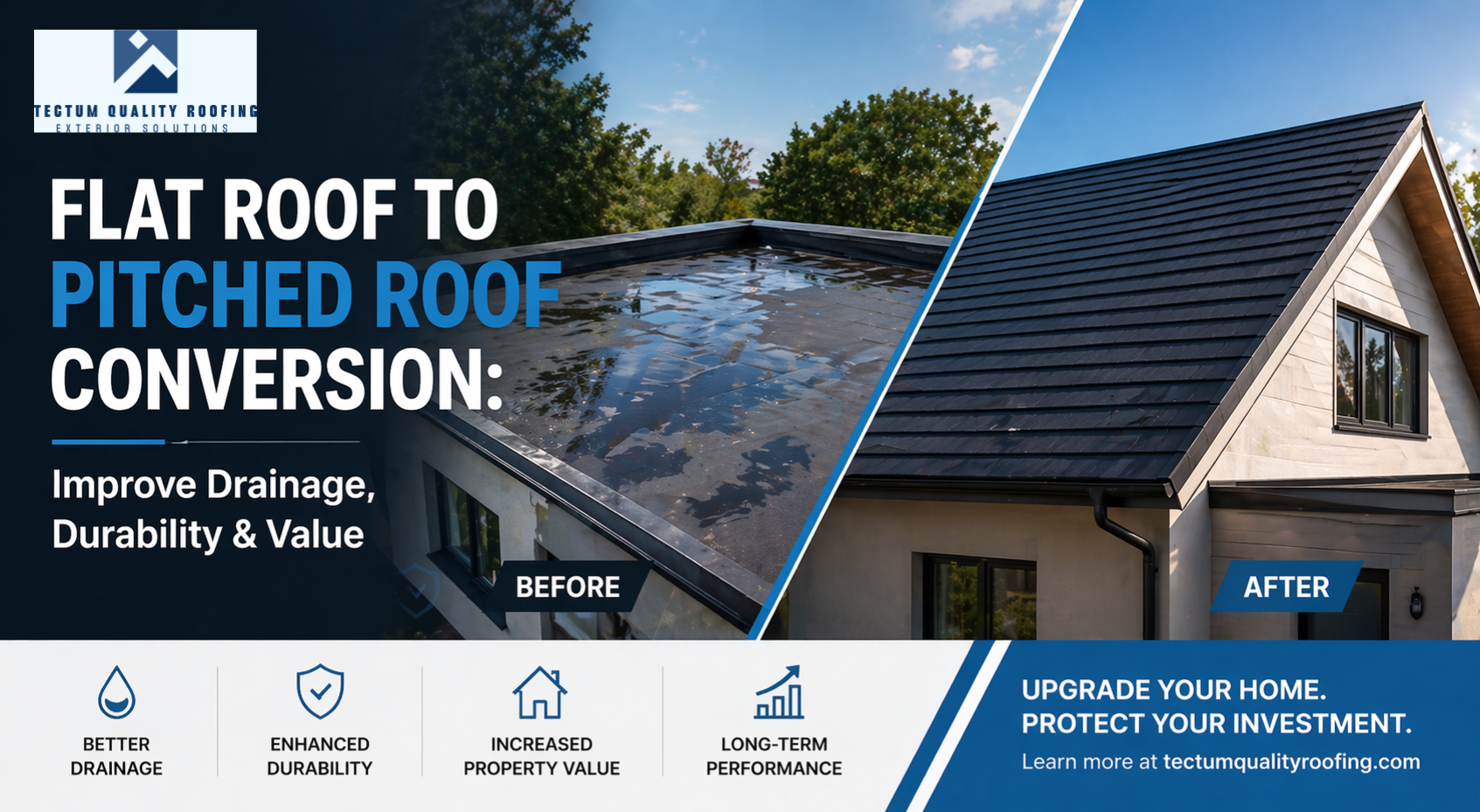
Flat Roof to Pitched Roof Conversion: Improve Drainage, Durability & Value
A flat roof to pitched roof conversion is becoming an increasingly popular home improvement choice for property owners who want better protection, improved aesthetics, and long-term structural value. Whether you’re dealing with drainage issues, frequent leaks, or simply looking to upgrade the look of your property, converting from a flat system to a pitched design can be a smart investment.
In this guide, we’ll explore everything you need to know about a flat roof to pitched roof upgrade, including benefits, process, cost factors, and why professional installation matters.
Why Homeowners Choose Flat Roof to Pitched Roof Conversion
Many older properties and some modern extensions still use flat roofing systems. While they are cost-effective initially, they often come with long-term maintenance challenges. A flat roof to pitched roof transformation addresses many of these issues.
1. Improved Drainage System
Flat roofs tend to accumulate rainwater, especially during heavy monsoon seasons. Standing water can eventually lead to leaks and structural damage. A pitched roof, on the other hand, allows water to run off quickly and efficiently, reducing the risk of moisture buildup.
This is one of the primary reasons homeowners opt for a flat roof to pitched roof conversion.
2. Increased Durability
Pitched roofs generally last longer than flat roofs due to better water resistance and reduced surface stress. By upgrading, you significantly extend the lifespan of your roofing system and reduce repair costs over time.
3. Better Energy Efficiency
A pitched roof provides improved insulation opportunities. This helps regulate indoor temperatures more effectively, keeping homes cooler in summer and warmer in winter, ultimately lowering energy bills.
4. Enhanced Property Value
A visually appealing roof structure increases curb appeal. Many buyers prefer homes with pitched roofs due to their durability and traditional aesthetic. A flat roof to pitched roof upgrade can therefore boost resale value.
The Process of Flat Roof to Pitched Roof Conversion
Understanding the installation process helps homeowners plan better and set realistic expectations.
Step 1: Roof Inspection and Structural Assessment
Before beginning a flat roof to pitched roof project, roofing professionals inspect the existing structure. They check load-bearing capacity to ensure the building can support the new pitched framework.
Step 2: Design and Planning
A suitable pitch angle is designed based on climate, drainage requirements, and architectural style. This stage ensures the new roof complements the existing structure.
Step 3: Structural Reinforcement
In many cases, reinforcement work is required to support the new roof weight. Steel beams or timber frameworks may be installed depending on the property.
Step 4: Installation of Pitched Frame
The pitched framework is constructed over the existing flat roof or after removing it. This is a crucial stage of the flat roof to pitched roof conversion process.
Step 5: Roofing Material Installation
Tiles, metal sheets, or shingles are installed on the pitched structure. The choice of material depends on budget, aesthetics, and durability requirements.
Step 6: Final Waterproofing and Finishing
Proper sealing ensures long-term protection from leaks. Finishing touches improve both appearance and performance.
Cost Factors of Flat Roof to Pitched Roof Conversion
The cost of a flat roof to pitched roof conversion varies depending on several factors:
- Size of the roof area
- Structural modifications required
- Type of roofing materials used
- Labor and engineering complexity
- Accessibility of the site
Although the initial investment is higher than simple repairs, the long-term savings in maintenance and energy efficiency make it worthwhile.
Common Problems Solved by Flat Roof to Pitched Roof Upgrade
Homeowners often consider a flat roof to pitched roof transformation to solve recurring roofing issues such as:
- Frequent water leakage
- Poor drainage during heavy rainfall
- Heat buildup inside the home
- Cracks and membrane damage
- High maintenance costs
A pitched structure resolves these problems by improving airflow, drainage, and overall roof stability.
Read More- Modern Pitched Roof Design Styles Benefits
Why Professional Roofing Services Matter
A flat roof to pitched roof conversion is a major structural change that requires engineering expertise. DIY or unqualified work can lead to safety risks and long-term damage.
Professional roofing companies ensure:
- Accurate load-bearing assessment
- Compliance with building standards
- High-quality material selection
- Proper waterproofing techniques
- Long-term structural safety
Working with experienced contractors like Tectum Quality Roofing ensures your roofing project is handled with precision and durability in mind. Their expertise in pitched roofing systems helps deliver reliable and visually appealing results.
Design Flexibility and Aesthetic Improvement
One of the biggest advantages of a flat roof to pitched roof conversion is the dramatic improvement in property appearance. Pitched roofs offer a classic architectural style that blends well with both modern and traditional homes.
Homeowners also gain flexibility in design options, including:
- Gable roofs
- Hip roofs
- Gambrel-style designs
- Mixed material finishes
This makes it easier to match the roof with the overall design theme of the property.
Long-Term Benefits of Flat Roof to Pitched Roof Conversion
Investing in a flat roof to pitched roof upgrade is not just about solving immediate problems. It is a long-term improvement that delivers ongoing benefits such as:
- Reduced repair frequency
- Lower maintenance costs
- Better insulation performance
- Increased weather resistance
- Higher resale value
Over time, these benefits outweigh the initial installation cost, making it a smart home improvement decision.
Conclusion
A flat roof to pitched roof conversion is one of the most effective ways to enhance your property’s durability, functionality, and visual appeal. From improved drainage and energy efficiency to increased property value, the advantages are clear and long-lasting.
However, the success of such a project depends heavily on professional execution. Partnering with experienced roofing specialists like Tectum Quality Roofing ensures that every stage from planning to installation is handled with care and technical expertise.
If you are experiencing recurring roof issues or planning a property upgrade, a flat roof to pitched roof transformation could be the ideal solution to future-proof your home.